
Chisinau
On getting traction, even in slippery places
If, like me, you’ve been charmed by those kilt-clad Scots bellying up to the bars of Boston, or Norwegians rowing in Viking unity in Times Square and other delightful World Cup displays of patriotism, I’d like to introduce you to the sucking black hole of their antithesis. We’re going to call him Mihail, because he asked that I change his name, for reasons that are about to become clear.
“Moldovans,” said Mihail, who is in fact one of them, “are stupid, lying, savages.”
Even before I arrived, I suspected that Chisinau, Moldova’s capital, was going to be hard to penetrate. For one thing, I knew almost nothing about it, beyond the fact that it was somewhere near Romania, had a thrillingly illicit breakaway region (more on that in a later newsletter), and had recently elected a young, Eurocentric, female prime minister that the guys from The Rest is Politics are very keen on.
Throw in the linguistic and cultural obstacles, and I spent much of my time in Chisinau worried about how I was going to find a way into a story. You can imagine my relief when, on my last day in the city, it finally came in the form of a foul-mouthed, pony-tailed, restaurant supply salesman with absolutely nothing good to say about his fellow citizens.
But let me back up.
The impenetrability was evident from the moment I landed. The severe young woman with stars on her epaulets sat expressionless behind the plexiglass at passport control, her lipstick bleeding into the corners of her mouth. I gave her my most winning smile. Her face did not move.
Attempting to take out some cash at the airport ATM, I realized I had no idea how much the currency, the lei, was worth, and there was no conversion provided on screen. A quick swipe of my phone would have of course provided that information, but instead I took a middling swing, and hoped I hadn’t just emptied my bank account.
An inquiry into how to get to the center got me a one-word answer (“Trolleybus”) and a vague gesture toward the parking lot.
I found the bus parked nearby and, in front of it, a woman in a light blue shirt that may or may not have been a uniform. I asked her. In English, if the bus went to the center; she responded with something that did not appear to mean yes. Just then a man who was clearly the driver stepped onboard. When I repeated the question to him, he pointed to the woman in the blue shirt (aha! So it was a uniform!), who, it turned out, was selling tickets, or at least that’s what I assumed when she showed me a roll of old-fashioned paper stubs–the kind a skeeball machine might spit out for you to redeem.
By this point, we were all on the bus, but I still wasn’t sure if the bus was going to the center. The woman in the blue shirt must have interpreted my hesitation as my not having any cash, because she then pointed to a QR code on the wall. When I shook my head ‘no’ to that (your periodic reminder that QR codes are the bane of unplugged travel and should be resisted at every turn), she then pointed to a card reader mounted on the wall behind us. It took me a few times attempting to swipe my card to figure out that the sticker laid over the machine’s face said it was not working. At that point, I looked at the woman, and she looked at me. Simultaneously, we decided that I wasn’t worth the trouble. I sat down for the ride into town.


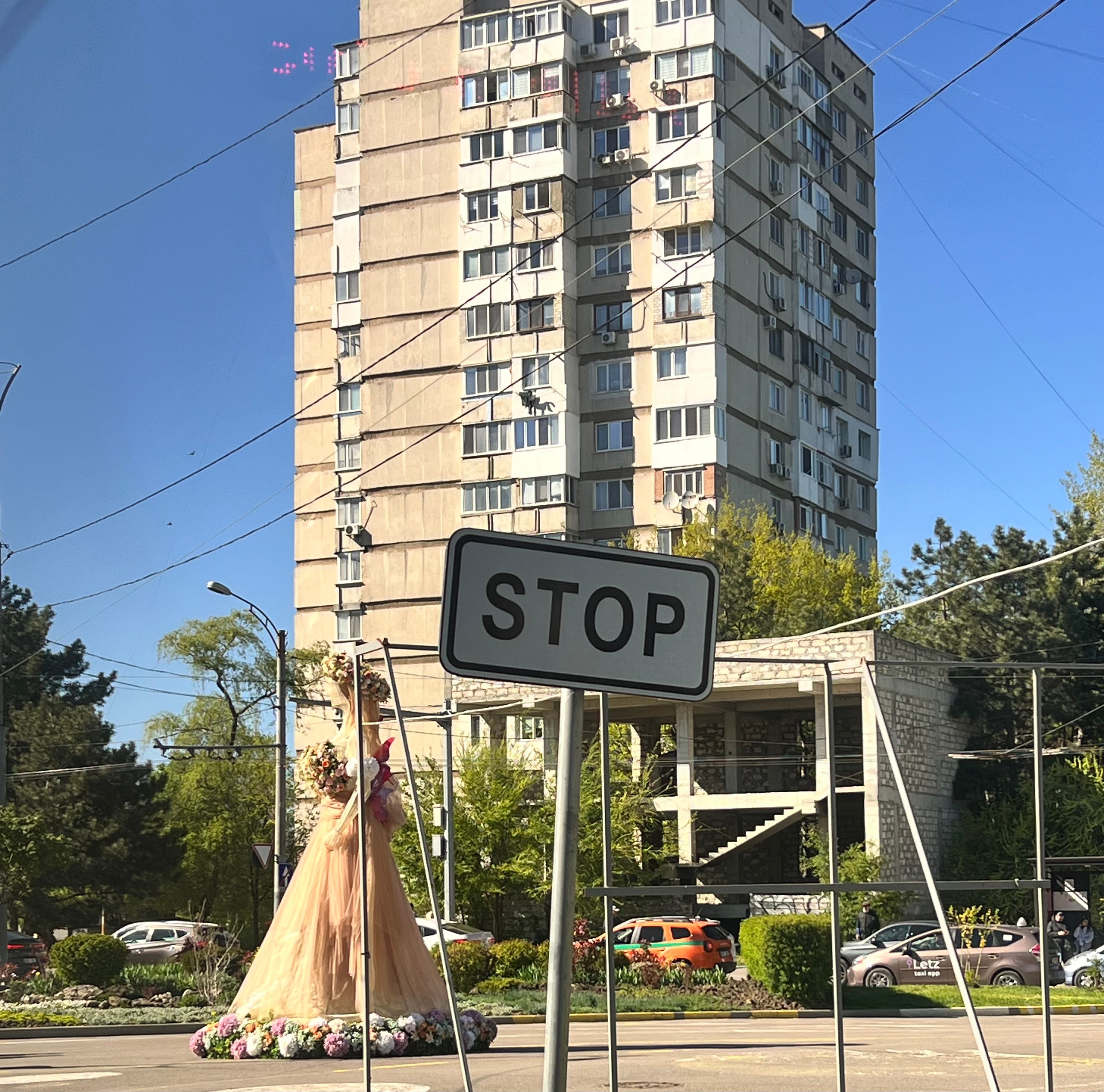
Chisinau struck me as an odd place. It is sprawling—I could see apartment buildings spreading far over distant hills—but also weirdly sparse, with large tracts of green separating developed areas. There was no shortage of towering Soviet-era monstrosities, and the main streets were broad and straight, the kind of boulevards that are good for driving tanks down. But when I stepped a block or two away, I suddenly felt like I was in a village, leafy and overgrown, with crumbling sidewalks and low, plastered homes.
In its architecture, Chisinau was the opposite of Utrecht. If the latter was a voyeur’s paradise, the former was closed to all comers, utterly lacking in street-level windows that might give a glimpse of how people lived. For that matter, there were no views into restaurants or shops either. Many of the latter were located in basements, down stairs leading to closed, unmarked doors, and even those at street-level frequently had some kind of treatment on their windows that prevented passers by from peeking in. Unable to read the signs, and with no visual cues to guide me, I walked into what I hoped was a drug store only to find it filled with intimidating looking orthopedic devices.


Chisinau also lacked some of the homogenizing signifiers of our globalized world. There was, as far as I could tell, no Zara or Starbucks, nor were there hipster natural wine bars or vinyl shops. Most disorienting of all, in this age of rampant consumerism, there was literally nothing I wanted to buy.
I don’t just mean that there weren’t any fetching little design shops or alluringly fragrant sourdough bakeries. I also didn’t come across any shops selling the kinds of “traditional” wares that normally get me excited. I did find a couple of shops specializing in colorful and intricate embroidery –aimed as far as I could tell, at Moldovans, who wear it on special occasions– but although the stitchery was beautiful, the fabric being embroidered was cheap polyester.
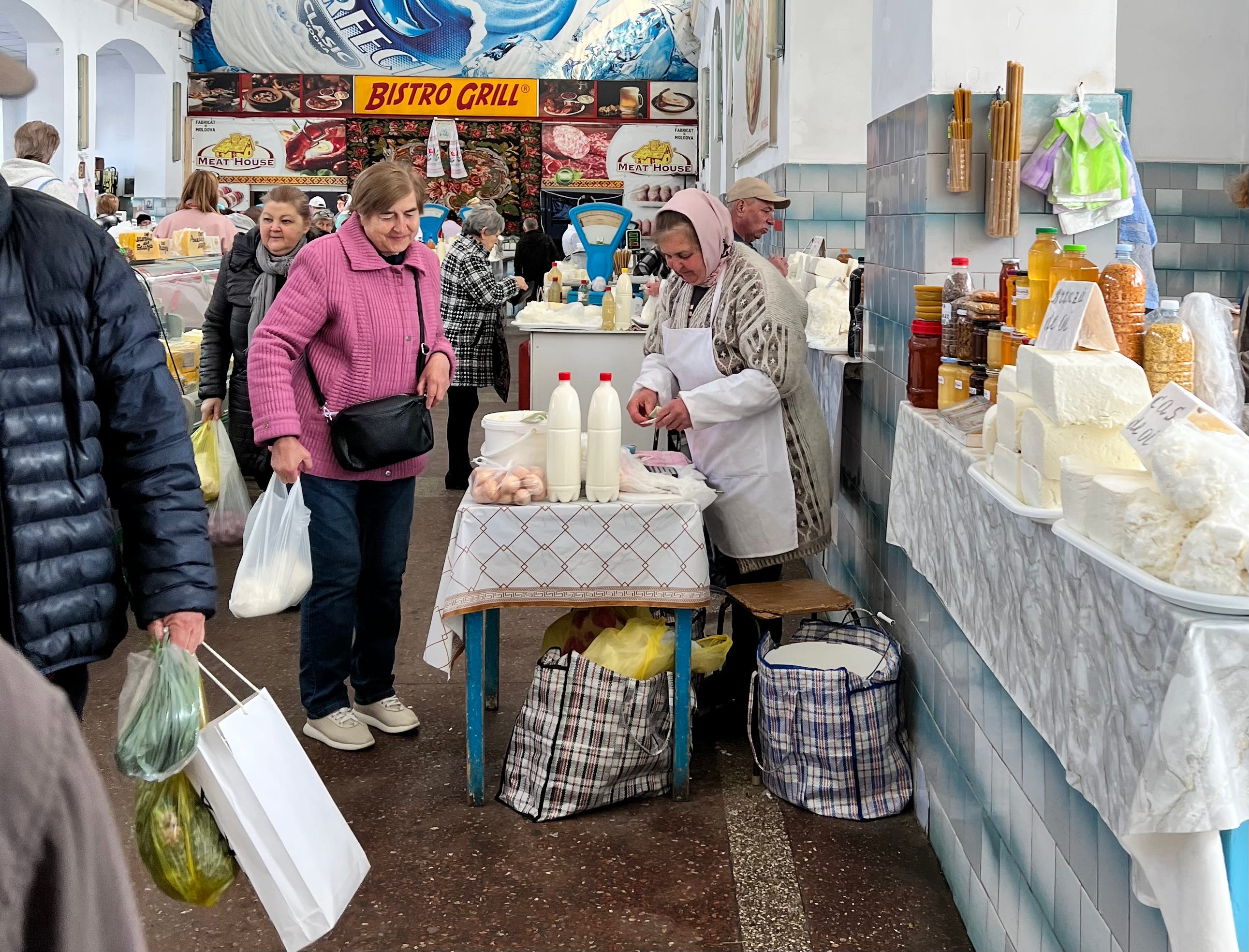
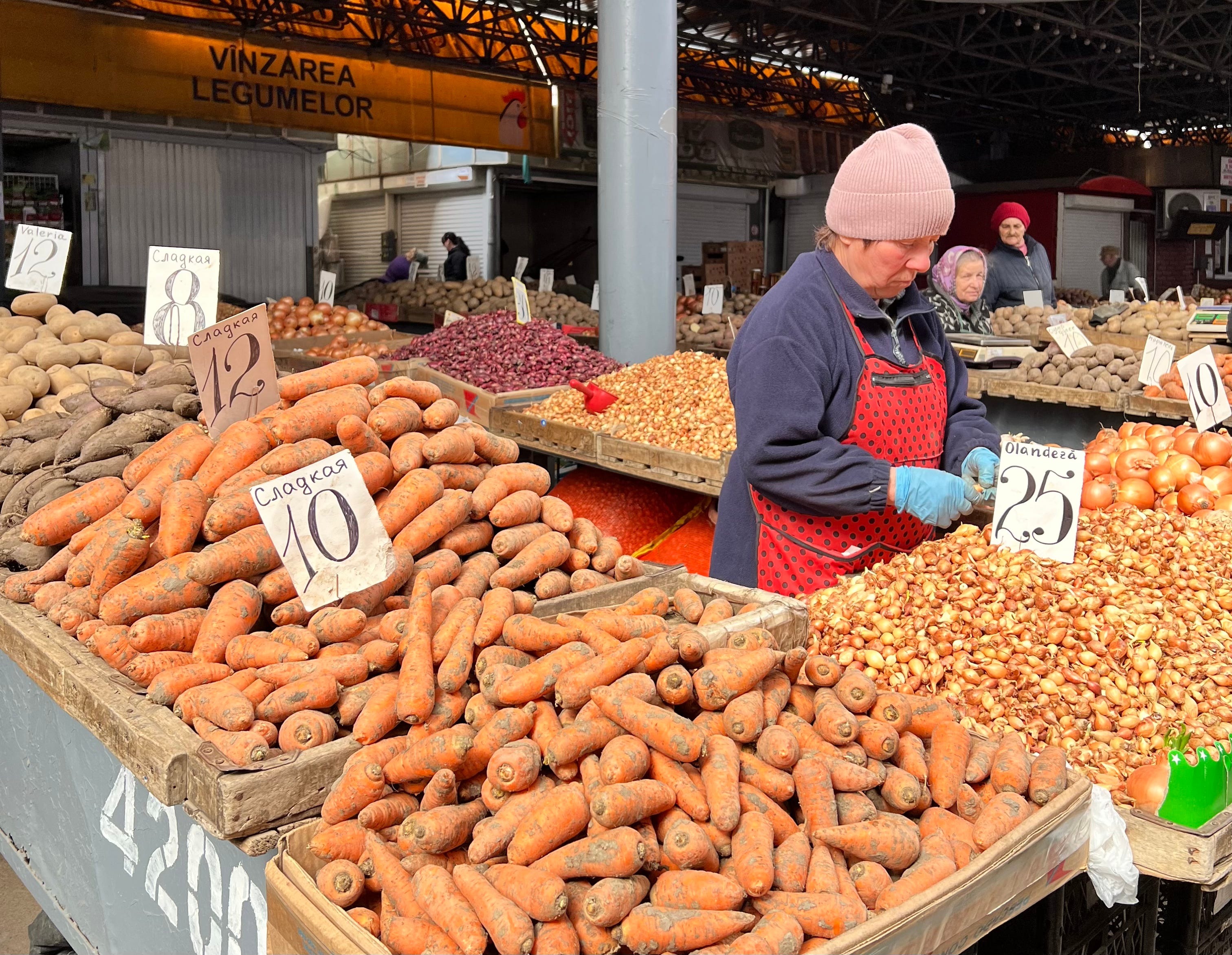
Even the market wasn’t all that enticing. Wlthough it did boast a row of stalls selling some healthy-looking root vegetables and ferments and an entire hall devoted to the many subtle variations on white cheese, it was otherwise stocked primarily with imported tomatoes and bananas. And I was permanently traumatized by the seafood section, where fish were packed into tanks like sardines even though they were not sardines at all but full-size carp.
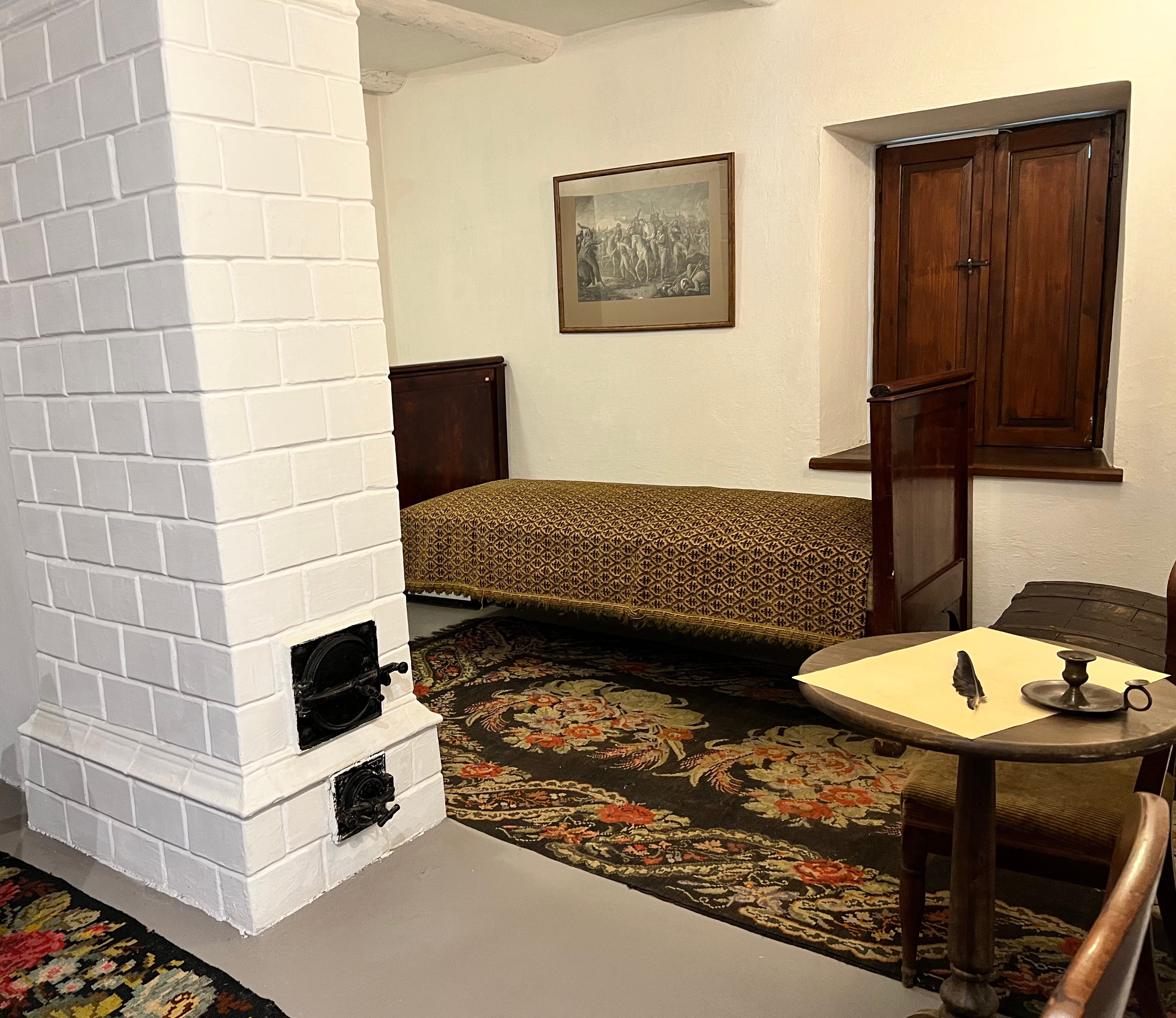
This resistance to being easily ‘consumed’ endeared Chisinau to me, and made me a little more appreciative of the small graces I did find. I liked the chain of outdoor park cafés hung with papier maché flowers overhead, and the ladies who sat for hours on street corners selling real lilacs. I liked the galleries at the art museum filled with Moldovan artist Eleanora Romanescu’s Hockney-esque landscapes (although perhaps we should be calling Hockney’s landscapes Romanescu-esque). I also liked that the whole art museum came to a shuddering stop so that a princessy bridal party could take their wedding photos. I liked the satisfied flourish with which the elderly docent opened the door at the homely Pushkin museum to show–ta da!--the writer’s bed.
But I definitely felt like a lot of important information wasn’t getting through, and never more so than when I entered the cathedral right as Mass was getting underway. Two women’s angelic voices were emanating from a chapel off to the side, so I moved toward there. When a priest in a heavily bejeweled frock stepped to the altar, everyone in the congregation genuflected vigorously, though the men went at it with particular gusto. Many of them kept bowing so low that they touched the floor, and I got the definite sense that I was witnessing a Pete Hegseth-esque display of performative masculinity, spiritual edition.
When it came time for communion, the priest distributed the wafer on a spoon inserted directly into each supplicant’s mouth, at which point he or she would cross themselves, and rush over to a table near the entrance. There, a nun handed them one of the four plastic cups she kept refilling with water without cleaning them in between. My first thought was: what, the wafer is too dry? My second thought was: Covid must have been a disaster in Moldova.
The nun also handed each person a little baggie filled with cubes of bread. Was it insurance, in case the first transubstantiation didn’t quite take? Was it a snack? And what to make of the woman who marched her young son over with her hand clamped firmly over his mouth, as if he might spit it out if she didn’t get an (unrinsed) glass of water in him first?
The closed architecture, the absence of familiar signifiers, the curious communion rituals, to say nothing of my lack of Moldovan and everyone else’s lack of English: in its unknowability, Chisinau was making it even harder than I expected to find a story. I was resigning myself to trying to weave something around The Three Yevgenias, my title for the not terribly interesting coincidence that both women at the tourist office, as well as another whom I met at my hotel’s breakfast room after first seeing her the night before in a wine bar (that traveler’s synchronicity again), shared the same name.
But that was before I found the one hipster coffee bar in Chisinau, and in it, the most vituperous man in all of Moldova.
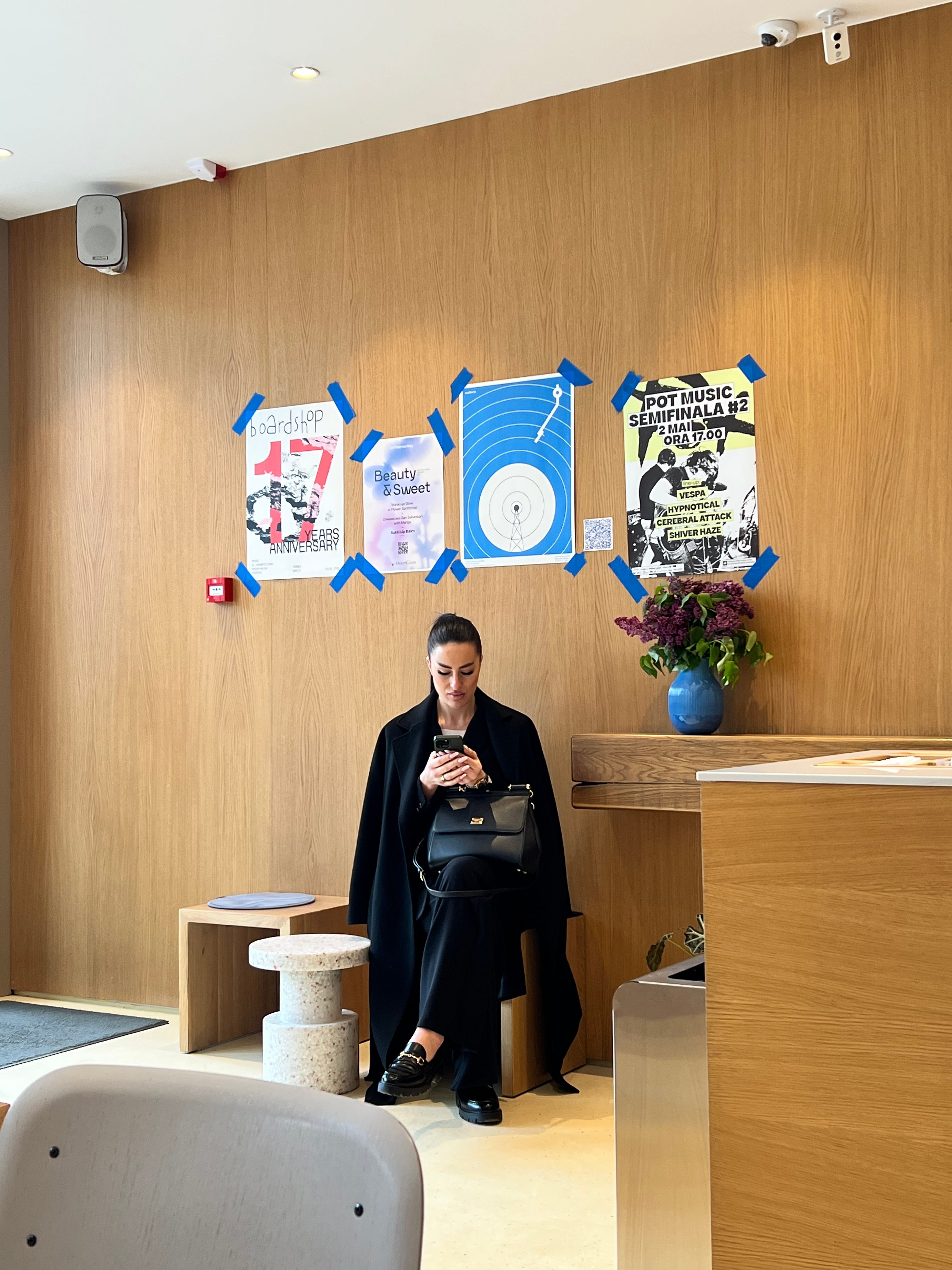
I went there on my final day in Chisinau specifically because I figured I would have better than average chances of finding someone who spoke English well enough to impart some insight into something—anything—that would make a better story than the Three Yevgenias. So I was mildly disappointed to learn that the barista’s did not really extend beyond ‘flat white.’
But as I sat there reading a magazine on Moldovan culture, helpfully translated in both languages, I came across a line that said there was no autochthonous Moldovan literature. I turned to the dark-haired man sitting next to me, and asked him if it was true.
Mihail, needless to say, confirmed that his countrymen were utterly lacking in literary finesse. He then launched into a discussion about how everyone in Moldova used to speak Russian but now there are very few Russian schools left.
“Is that a good thing?” I asked.
“It’s a very, very bad thing,” Mikhail replied.
Mihail explained that his job took him to trade fairs all over eastern Europe. The colleagues he encountered there were from Ukraine, Uzbekistan, Serbia, and they all communicated via Russian. All, that is, but the “stupid Georgians who had to make a point and only speak Georgian.” He paused to take a sip of his coffee and gather steam for the onslaught ahead. “And that’s going to be us soon.”
I asked if entering the European Union, which Moldova is currently trying to do, wouldn’t mean better opportunities ahead. He scoffed. “You really think that’s going to happen? Why would anyone in the EU invest here? The people are too stupid. There are maybe 100 smart people in the whole country. The only way to get something to work in this place is to send in a bunch of Germans to run it.”
He proceeded to tell me that in a country of what was not very long ago 4 million people, 1 million had left for Europe, and 1 million were dead. (Later I looked it up, and this count turned out to be more or less true, if by ‘dead’ he meant rapidly falling fertility rates. From a high of 3 million in 1990, Moldova’s population has shrunk, mostly via emigration, to 2.2 million today). “The rest depend on money sent from emigres,” he spat. “That’s our whole economy.”
But wasn’t Moldova positioning itself as a wine producer? I asked. The look of contempt that crossed Mihail’s face could have frozen the scalding air cooking the houseplants in some poor Parisian’s zinc-roofed apartment right now. “Why would Europe buy that crap?” he responded. “When the worst, cheapest Spanish or French wine is better than Moldovan?”
When I told him I was about to head over to the national history museum, his scorn grew, unfathomably, even sharper. He dared me to name a single famous Moldovan, and, mortified, I had to admit that beyond the prime minister I could not.
He drew his index finger and thumb into a circle and held it aloft. “Zero,” he said. “That’s because there are none. “They have to put the same guy on all the bills because they can only come up with one.”
He meant Stephen the Great, the medieval prince who defended Moldovan independence from a host of opponents, including the Ottoman Empire, for 47 years.
“But I thought he was great?” I ventured.
“No, he was a small man. Very small. That’s why they had to put his statue on a pedestal.”
I was beginning to ascertain the limits of Mihail’s perspicacity.
He must have seen the shadow of skepticism cross my face. “Okay, so maybe he won one battle,” Mihail allowed. “But after that, he couldn’t beat the Ottomans so he went to Russia and married the ugliest of all the emperor’s daughters to save us. That’s all he did: he married an ugly girl.”
As for the museum itself? “Full of lies,” Mihail responded. “They’ll try to tell you Moldovans are descended from the Romans–there’s even a statue of that wolf and whatchamacallit out front.”
“Remus and Romulus?”
Yeah. Them. But it’s all made up. They’re trying to create this grand history, because without it, we have no identity. Except for collective stupidity.”
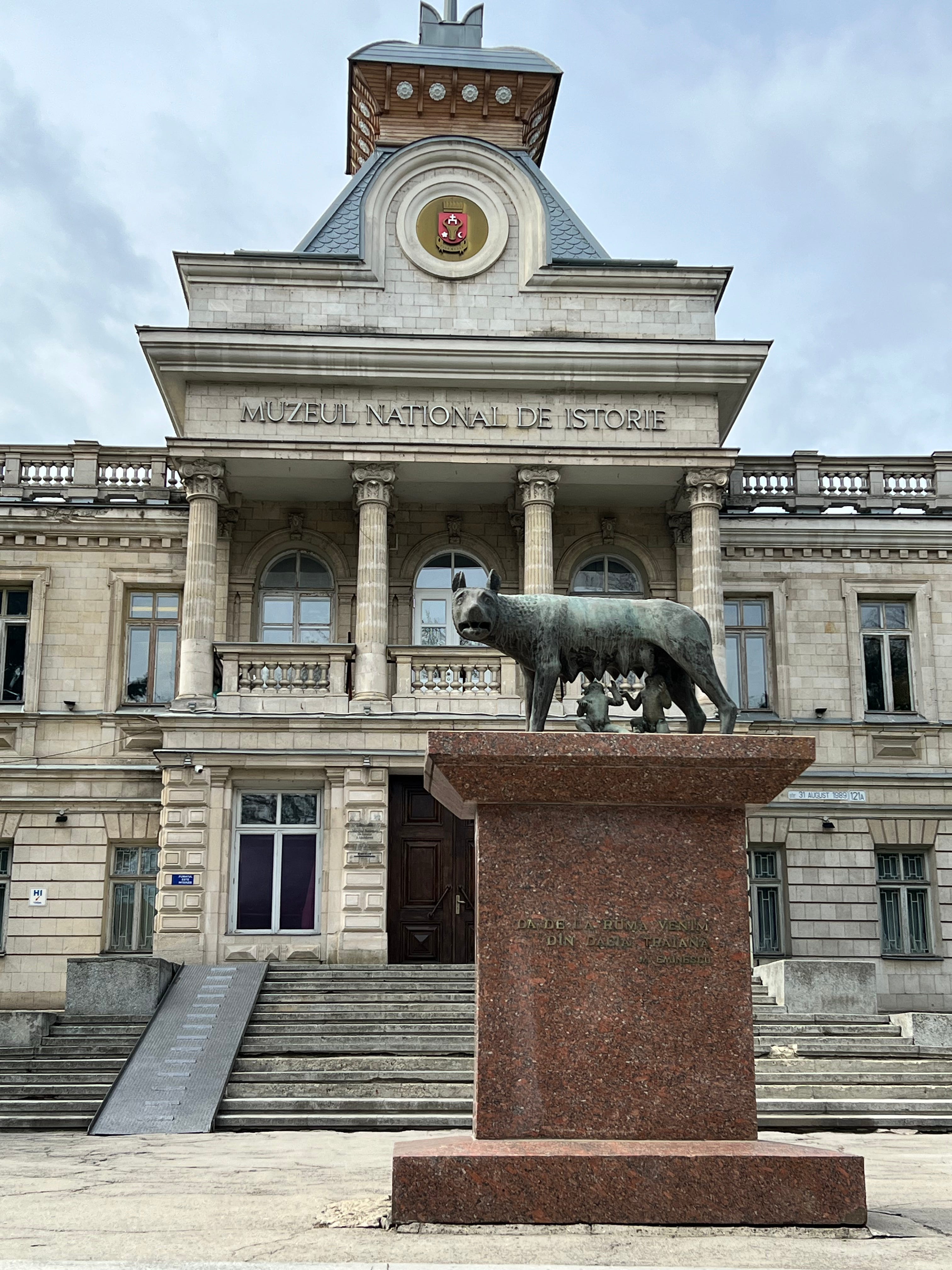
I didn’t have the heart to tell him that a descent from two wolf-suckling twin boys might not be exactly accurate for the Romans either, but I took his point. And once I got past the sculpture out front, I had to admit that the history museum was not exactly riveting (also that Stephen did look a bit on the short side).
But it did explain a place I had never before been clear on: Bessarabia. The name sounded familiar, and although I knew it no longer existed, I suspected it was of those regions that changed hands so many times in the pre-, and during-world war era that it wasn’t even worth trying to keep up with it. If pressed, I would have guessed that today Bessarabia was incorporated into Russia, or maybe Ukraine. But no, I now learned, it made up two-thirds of what is currently Moldova.
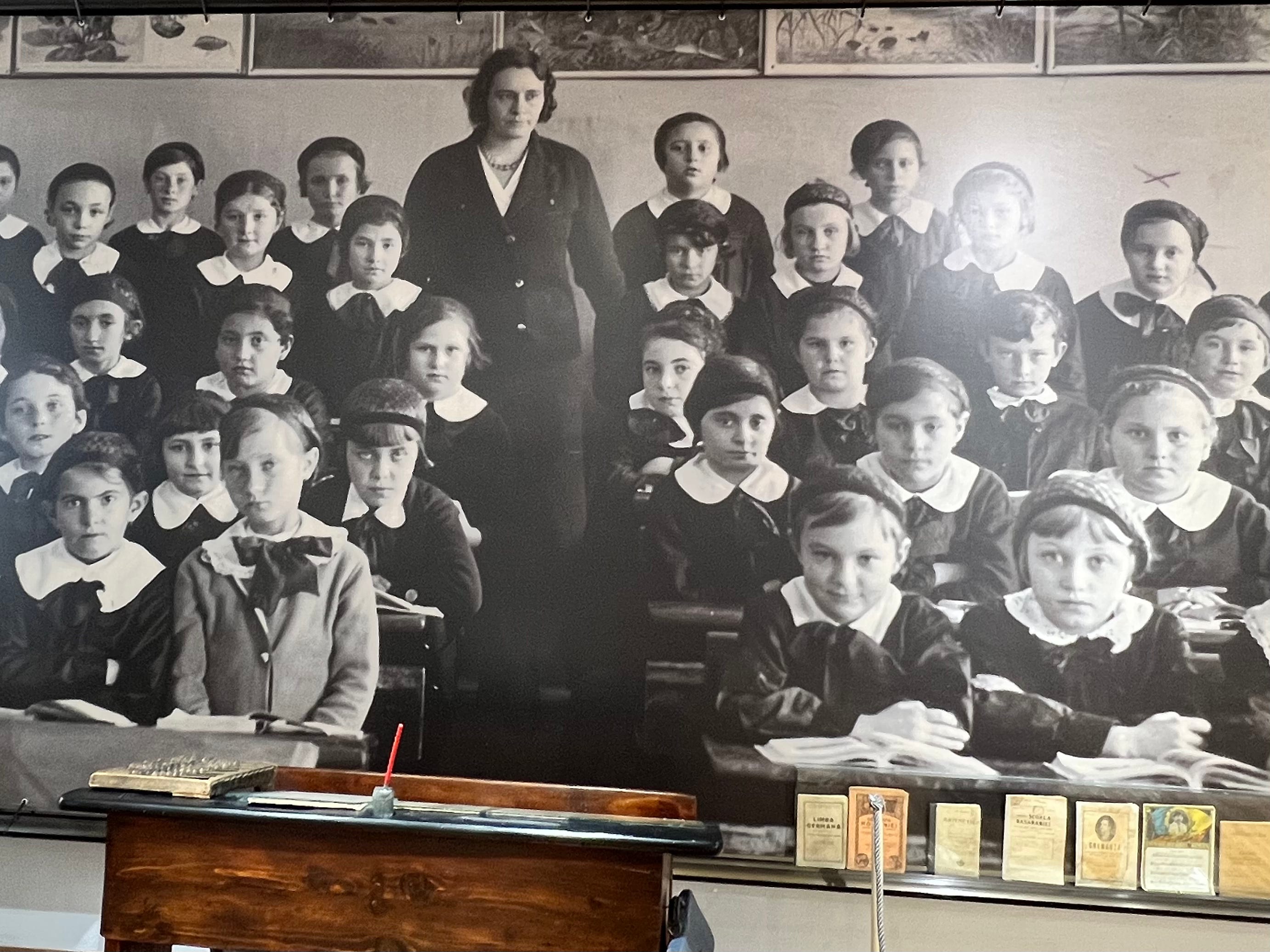
In one of the final rooms of the museum, I came across a wall-sized photo of a schoolroom filled with girls in stiff white collars, seated at their desks. The photo appeared to be from the 1910s, and the girls all looked to be around 8 or 10 years old. There was something about their grave little faces that reminded me of my grandmother. And then I remembered. Years earlier, I had done a little genealogical research to try and figure out from which Eastern European shtetls my grandparents had emigrated. I recalled now that my grandmother had been 12 at the time, when, together with her mother, and sisters, she arrived at Ellis Island. Where it was duly registered that she came from Bessarabia.
So it turns out I am one of the moronic Moldovans of whom Mihail had spoken. And that the place that had seemed so fiercely resistant to my attempts to gain traction was in fact the one—out of all the places in this world I’ve traveled— to which I am actually connected.
To engage in pedantics, what you went to was an Eastern Orthodox Divine Liturgy (not mass). Much of what you described is fairly common throughout the Orthodox world from Africa to Palestine to Greece to Eastern Europe. Orthodox Christians don't hold to "transubstantiation."
Key to the Eastern Christian spiritual life is humbling oneself, which those bows you witnessed more or less participate in. Liturgy isn't about performance, I doubt those men were thinking of anybody else watching them :)
Wonderful. Love your work, insights, humor. I smiled all the way through.