
Visby
The long view, from a Swedish island in the Baltic Sea
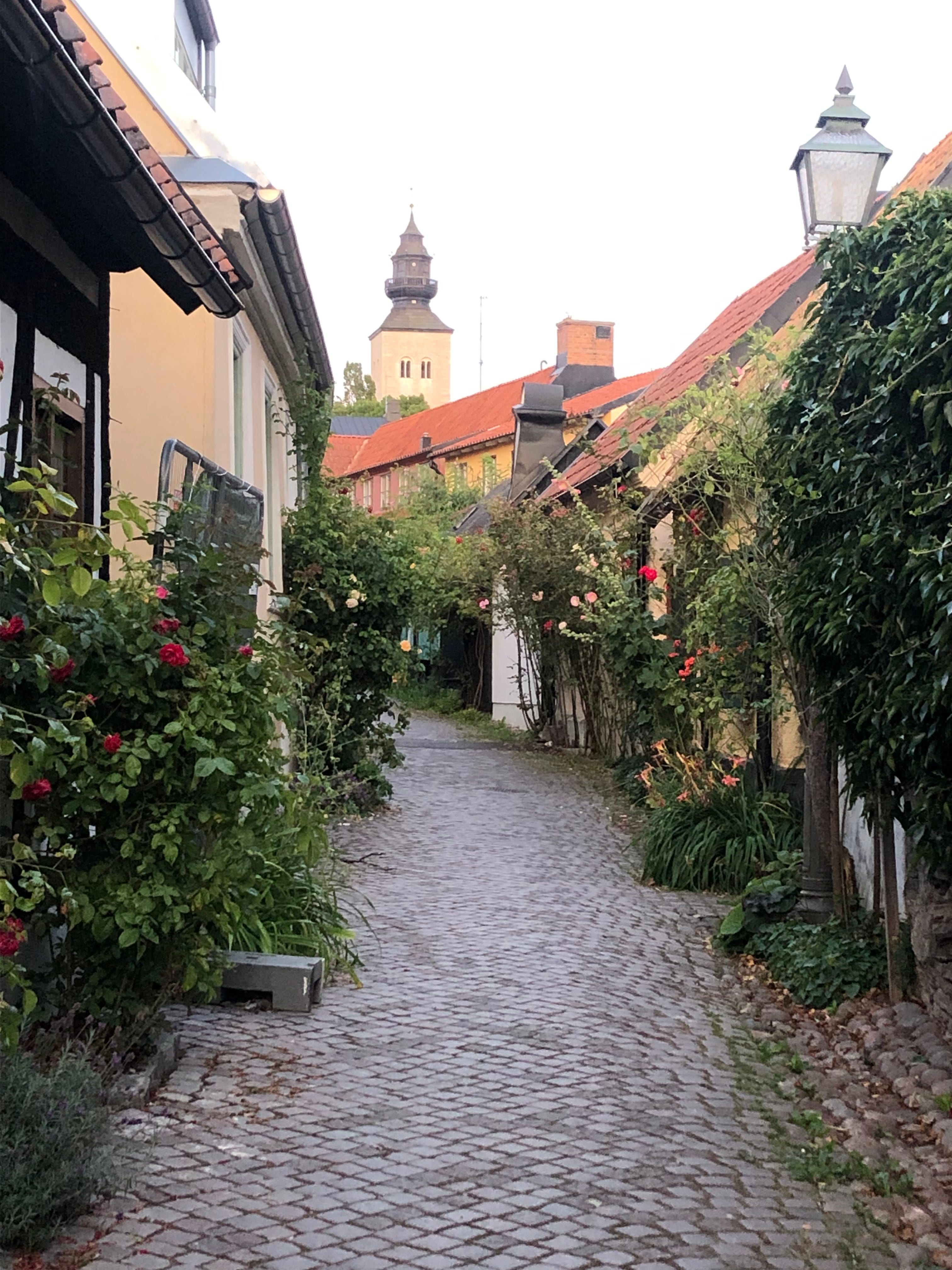
I was meandering through an alley lined with hollyhocks when up ahead, a mossy-looking cobblestone twitched. It was just past sunset, and the gloaming was blurring the hard edges of things, so for a second, I thought that maybe it had just been a trick of the light. But the cobblestone twitched again, and then got up on its little legs and ran to the other side of the street. I inched toward it cautiously, and found a prickly critter nosing a patch of weeds, thoroughly unperturbed by my presence. It was a hedgehog.

I had never seen a hedgehog in the wild before, if a city of 25,000 can be called ‘the wild.’ But then, I had never been to Visby before either, and thus far, it seemed entirely plausible it was the kind of enchanted place where adorable woodland creatures carouse the streets at dusk.
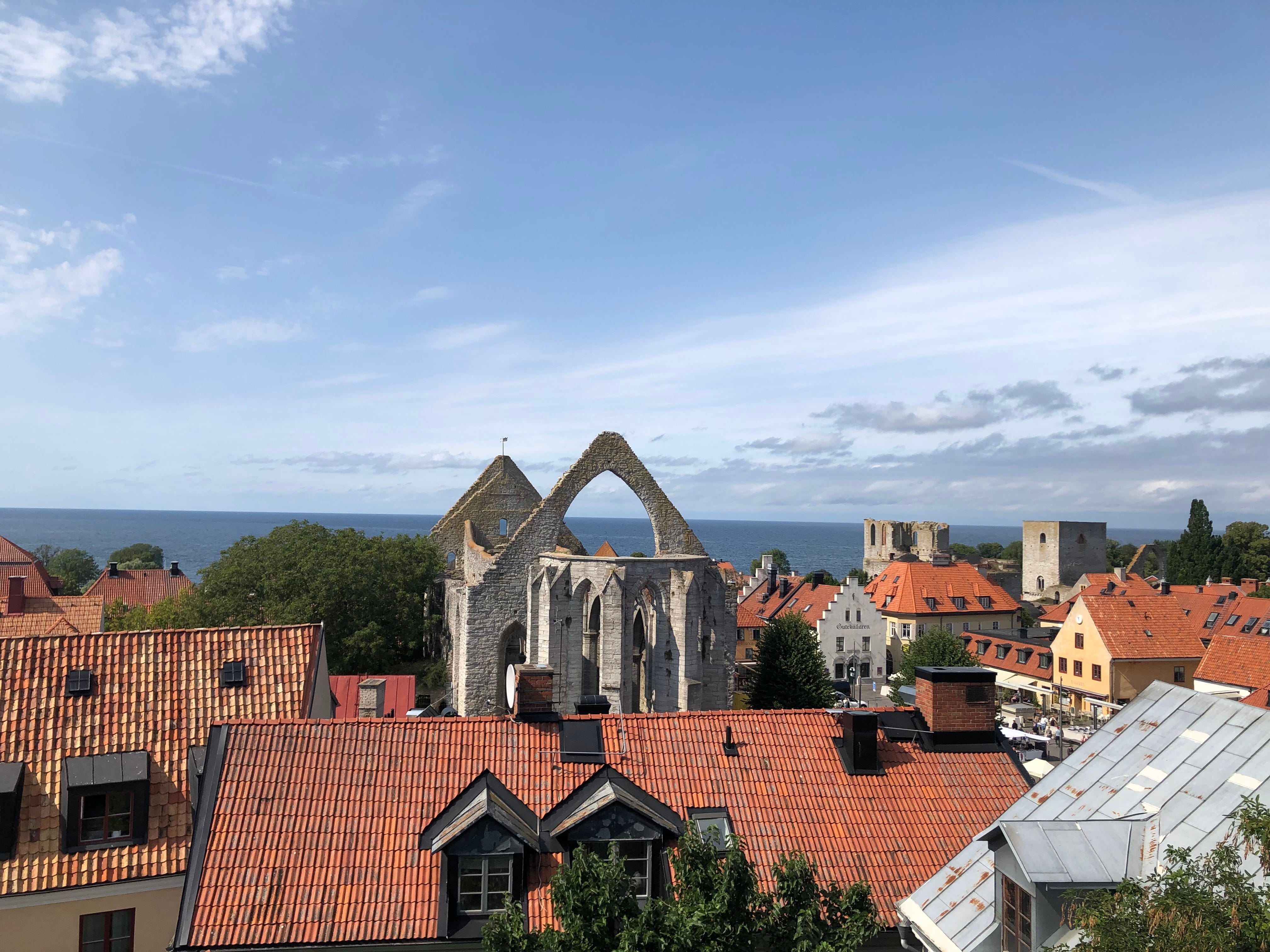
Visby is the capital of Gotland, a Swedish island in the Baltic Sea. It is considered (by urban heritage experts) the best-preserved medieval city in northern Europe, and (by me) totally captivating: Narrow streets of neat stone houses with prettily contrasting window frames and collections of odd knickknacks on the sill. Hollyhocks and wild roses growing with abandon. Viewpoints along the city’s upper streets of corrugated red tile roofs and soaring black steeples that spill down to the sea. A sunset so striking that, come time, seemingly half the city heads to the waterfront to watch it. A self-serve honey shop where the light glows from the open door like nectar itself.
Admittedly, there is one long street with the usual glut of self-consciously cute tourist shops, and more ice cream vendors than any one city needs. Yet somehow, even at the tail end of summer, the city managed not to veer over into cringey Ye Olde Thymes territory. And every permanent resident I spoke with told me that even when the season was long past and all the vacationing mainlanders had left, Visby still had life to it.
There have been people here for a long time. At the Gotland history museum, they’ve recreated a couple of the graves that archaeologists have unearthed, including one for the Stone Age ‘Hedgehog Girl,’ who was buried 5000 years ago with five hedgehog jaws resting delicately on her chest—tribute, no doubt, to that glorious age when hedgehogs were properly worshipped as the majestic and omnipotent gods they are, and not left to roam the streets aimlessly at dusk. (There was also a large pile of cod bones buried near the girl’s head, but the hedgehogs would prefer not to talk about that.) And there is an astonishing collection of picture stones from the first century AD through the Viking age, their drawings so vivid that you would think the Druid tattooist down the street had done them.


But the real action is medieval. In the 12th century, Visby became part of the Hanseatic League, the northern trade alliance that brought merchants from Hamburg to Novgorod together to corner the market on salt, fish, timber, and beer, and to build city-states that operated like corporate franchises. The League, which had its own armies, wasn’t shy about blockading ports or bullying kings if someone messed with its profits. You could think of it as a mashup between a multinational conglomerate and the Mafia, just with more cod.
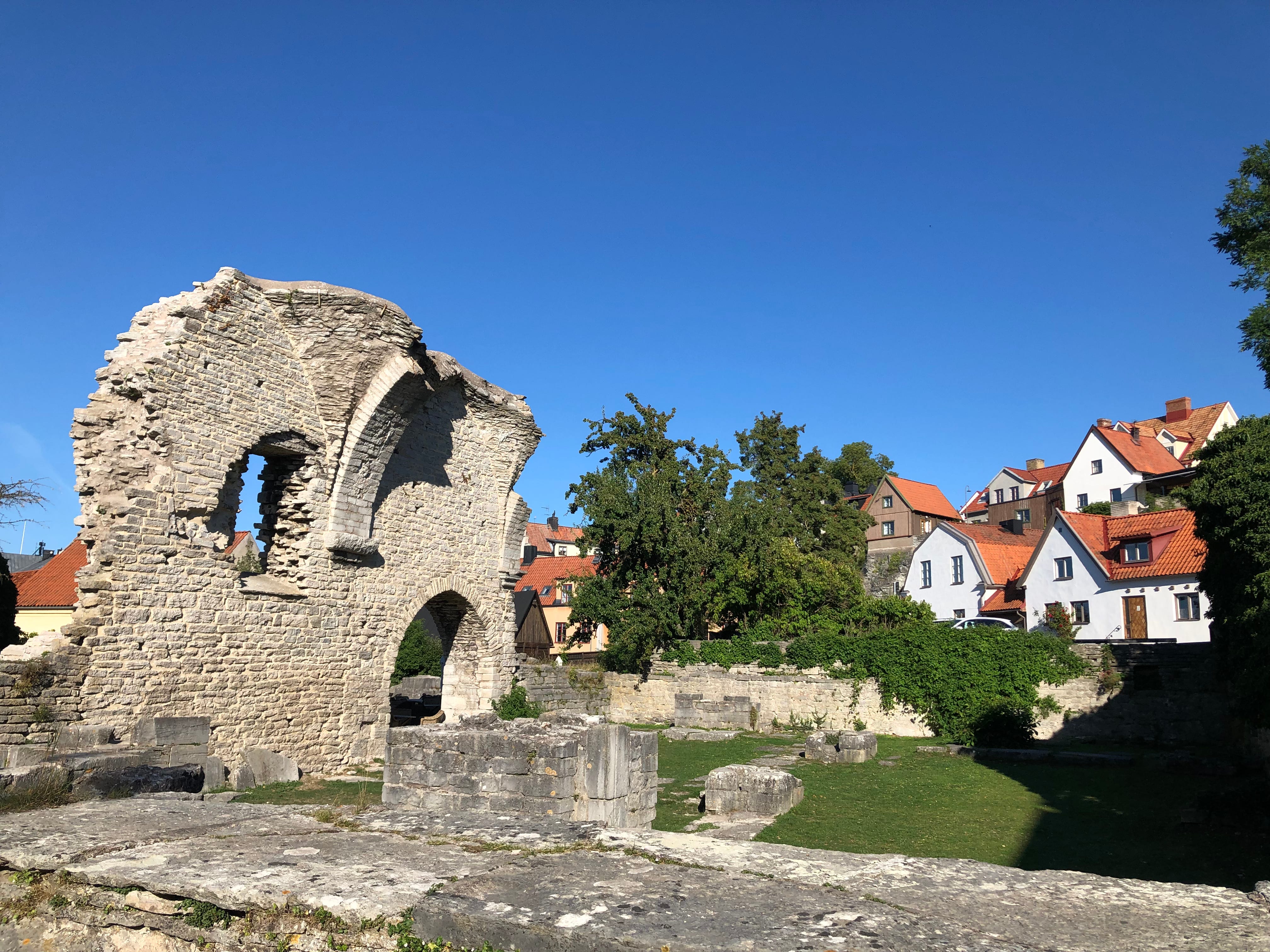
Visby was at the center of it, the dominant hub for trade in the Baltic Sea. All that money translated into a prosperous city of merchants, evidence of which is still there in the warehouses that have since been turned into restaurants or coffee roasters; in the evocative remains–like soaring upright skeletons–of the many, many churches, and especially in the stone walls, erected in the 13th century and still sturdily intact, that ring the city and once protected the wealth inside it, albeit not necessarily from foreign marauders.

“The thing about the walls is that they weren’t built to keep out foreign invaders,” Ulrika, the co-owner of the hotel where I had the good fortune to land, told me. “They were built by the merchants to keep out the farmers in the countryside.”
Just before my hedgehog encounter the previous night, I had walked past a stretch of wall that bordered the sea and marveled how, in good Nordic fashion, the city had managed to turn this once purely defensive structure into something that served its residents in more hedonistic ways, adding not just a strip of parkland that offered prime sunset viewing, but hammocks, wooden lounge chairs, and fire pits that no one thought to defile or destroy. So I was interested not only in how a bunch of bougie citydwellers kept the pitchforked masses from their streets, but in how, more generally, people in Visby today thought about the past that remained so visibly present.
At the time we had this conversation, I was seated at breakfast, on a grassy terrace outside the hotel, overlooking the remains of a 12th-century hospital. Ulrika was shooing off the crows that brazenly stole entire slices of cheese from anyone foolish enough to leave their plate when they went inside for a coffee refill. But she took the time to tell me how she had come to own the oldest inn in Visby (its main building dates to the 1200s), a story that involved no previous hotel experience, a long distance relationship with a professional poker player, and some extremely good timing.
And she also told me how much the city’s history figures into why she loves it. “Even just cleaning a room here, or walking through the streets, you can feel the past,” she said. “And people here really care about tradition. Christmas, Midsummer’s Eve, Medieval Week–they take it really seriously.”
I learned just how seriously later that morning when I wandered into Christer Mattson’s glass blowing studio. He opened it in 1996, and today it is both workshop and shop, where he shapes and sells the delicate oil lamps, vases, and beer mugs that he crafts from recycled glass (also known as bottles) that he collects from the Black Arms pub down the street. When I entered, he was blowing a molten glob into a delicate, red-hot bubble before his assistant cut off the piece with a pair of scissors and placed what was now a perfectly formed lamp in the kiln for overnight annealing. I told him the piece was beautiful, but he told me it was too early to tell. “You have to wait until the next day to find out if you’ve made anything good.”
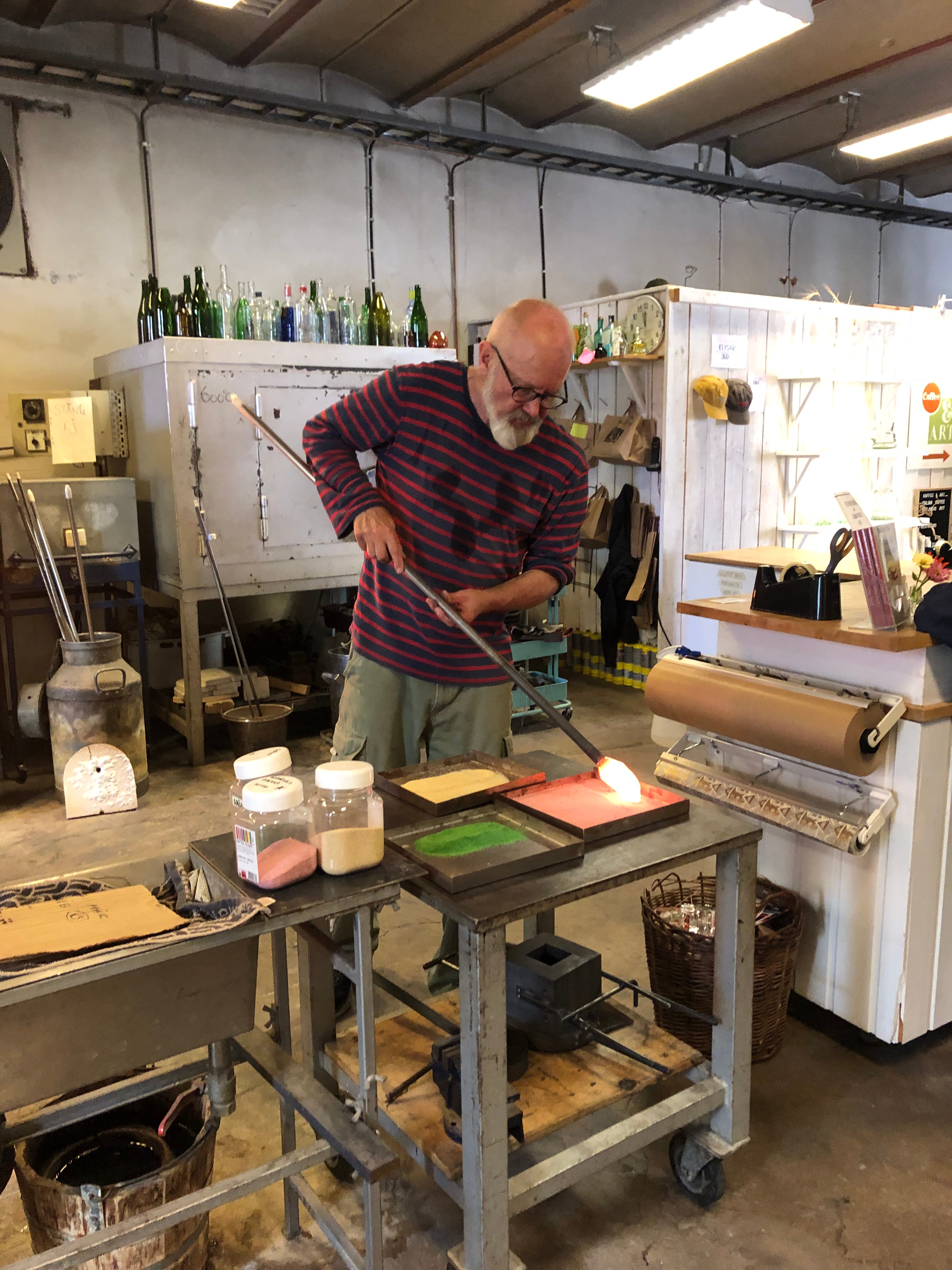
During the annual Medieval Week, all of Visby dresses in historic costumes as they go about their business. During his first year in the city, Czech glassblowers visited to demonstrate historic techniques. Learning from them, Christer became obsessed with the loops, knobs, bubbles and miniature sculptures—”even wild boar heads!”— they could create. It gave him inspiration for his own work, and since he was now using some of the techniques of a medieval glassblower, he figured he might as well join his fellow citizens and dress like one. So now, each year when the festival rolls around, he dons the robes and turban of a 14th-century craftsman who was as much alchemist as artisan. “It adds,” he said, “To the authentic medieval traces that the city already has.”
On the wall of his studio, I noticed a couple of baseball hats are for sale, embroidered with the number 1361. I was about to ask Christer what it meant, but then I remembered something else I had learned at the museum: in 1361 Gotland was invaded by the Danes, who fought the local population at the Battle of Visby, killing 1800 people, and bringing the whole island under the control of the Danish king Valdemar IV. To avoid being sacked, Visby agreed (in a manner not unreminiscent of certain companies attempting to placate certain other avaricious ruler) to “donate” a few literal barrels worth of gold and silver coins. And even so, the Danes still plundered the churches and monasteries.
The hats, I realized, were the Gotland version of ‘Never Forget.’
Which is something for a battle that took place nearly 700 years ago. But if that trauma was frozen in local collective memory, it may have something to do with the fact that, for Visby, it was basically all downhill from there. It never recovered economically or militarily, and thanks to some vicissitudes that included pirates with the excellent name of the Victual Brothers (fallback career: Americana band? Barbecue joint?), the city was eventually expelled from the Hanseatic League in the 1470s. When the Protestant Reformation rolled in some decades later, the remaining population didn’t even have the energy to raze the old Catholic churches: they just left them to decay.

And that, ironically, is why Visby is so beautiful today. During several centuries of unimportance, it was pretty much left as it was during its heyday, stone houses, churches, and all. Until Stockholmers in search of the perfect summer holiday discovered it and started buying up all the houses.
Today, plenty of Visbyites consider those vacationing mainlanders another invading force, even if they depend economically on Gotland’s status as Scandi Summer Central. But that hasn’t erased the memory of the older invasion. When Adam, a well-tanned Gotlander who spent all of his 30 years on the island and currently works for a car rental company, learned I lived in Denmark, he started right in. “You know that their children are the slowest to learn to talk, don’t you?,” he said. (I did know this, and have frequently deployed the same statistic myself in defense of my own pitiful skills in the language.)
“I take it you’re not a fan of the Danes?” I asked.
“Let’s just say there’s some history there,” Adam replied.
I ruminate a lot these days on how, a century or two from now, our descendants AI overlords are going to think about the era in which we currently find ourselves. Visby may give one answer.
Because Adam wasn’t referring to his own personal history; he was referring to Gotland’s. Rapid decline may guarantee some pretty streets; it may even mean your town stays intact enough to one day become an absolutely entrancing summer idyll. But like the hedgehogs who have been leaving their jaws around this island since at least the Stone Age, the trauma of it survives.
The Addresses
Below, paid subscribers will find a list of the places where I stayed, ate, and shopped in Visby. But, a gentle reminder: wouldn’t it be more fun to find your own?