
Transnistria
Be careful what you wish for
I don’t remember when exactly I first read about Transnistria, but I do remember exactly how it made me feel:
Oh, I want to go there.
That was at least 20 years ago. Back then, I had already developed a healthy fascination with those weird, self-proclaimed countries that periodically pop up, trying to claim their bit of sovereignty on the map, if not in real life. The Italian Regency of Carnaro dreamed up by that poet-proto-fascist d’Annunzio? The Republic of Minerva built on an artificial island by an erstwhile Vegas real estate magnate? Even when they were nothing more than an artist’s provocation or some ponytailed dude’s tax protest, I loved the way these quixotic, imagined countries compel you to think about identity, and what it means to be a nation.
By then, I had been enamored by travel for almost as long as I could remember. In my late teens I had already imbibed every one of Richard Halliburton’s books, and had acquired a habit of searching Oxford Books in my hometown of Atlanta for those decades-old, dog-eared paperbacks with the groovy fonts that promised to lead you safely across Afghanistan on the Hippie Trail or explain how you could cross the oceans cheaply by freighter. I knew I wanted to see places and experience cultures that were new to me, and so much the better if they were not (or not only) the European capitals and Caribbean islands that everyone else went to, but more mysterious, harder to reach.
So when I heard about this tiny, breakaway nation that practically no one I knew had ever visited, that was hard to get to, wedged between Moldova and Ukraine, trapped in a Soviet-tinged past, and officially recognized by no other government in the world? It might as well have been called the Federation of Lisa Abend Travel Fantasies (FLATF, for short, with Nostalgiana as its capital).
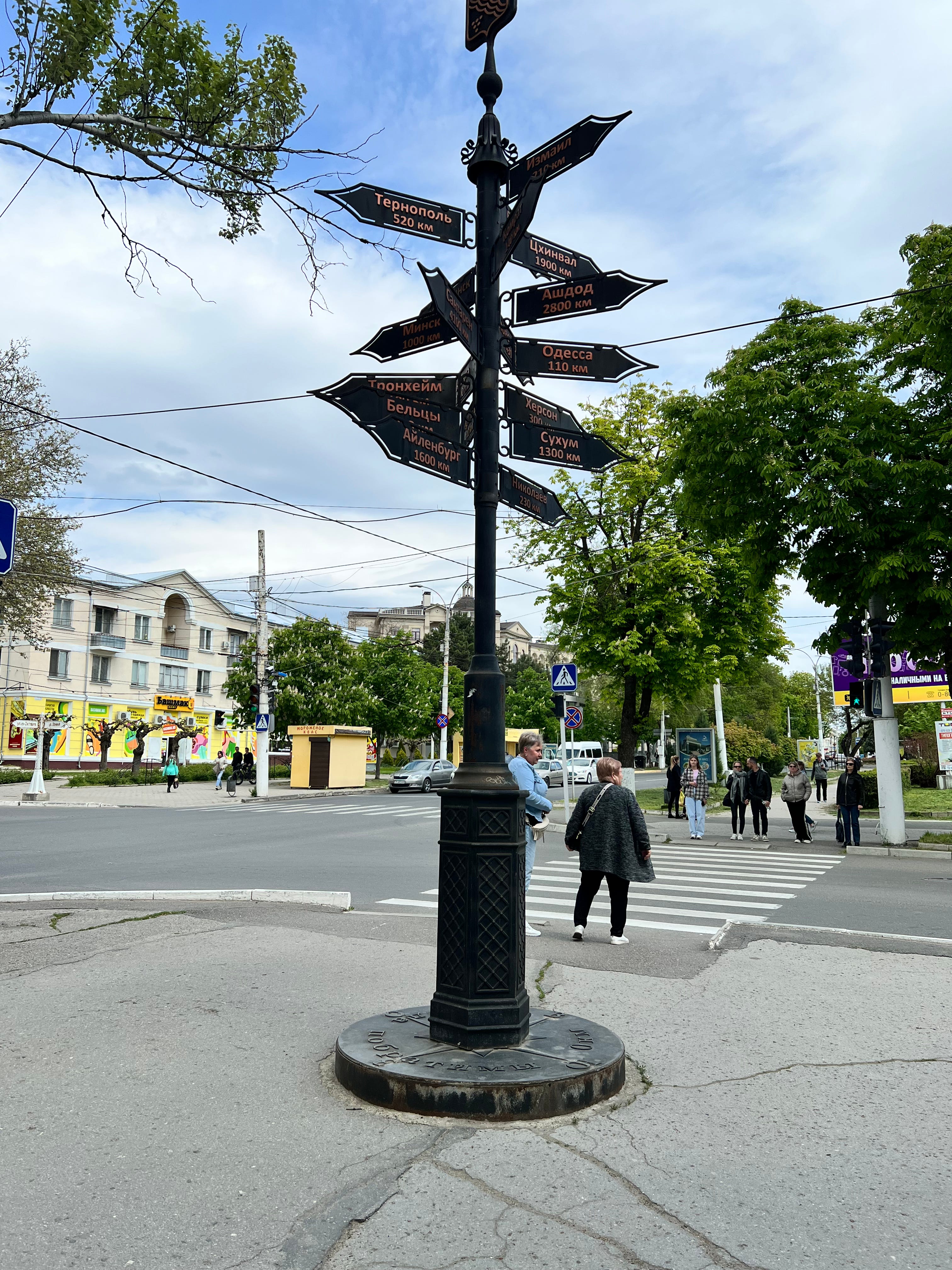
And in Chisinau, at long last, I had my chance. Technically, Transnistria is part of Moldova, which itself used to be part of the USSR. When Moldova left the Soviet Union in 1991, the predominantly Russian-speaking population that lived in its Eastern strip running along the Dniester River, decided–with a decent amount of ‘help’ from the KGB– that they would rather not go with it. The Soviets came to those holdouts military aid in a 1992 war of independence, then never left. But Russia itself apparently decided Transnistria was more appealing as a thorn in Moldova’s and ( because the country is trying to enter the EU) Europe’s side than incorporated into the motherland. And so Transnistria exists as this in-between place, neither Moldovan nor Russian nor, despite its official name (the Pridnestrovian Moldavian Republic) truly independent.
It is, however, open to tourists. The Yevgenias at the Chisinau tourist office were united in this information: it was a simple day trip so long as I took my passport, brought cash because I wouldn’t be able to use the ATMs there and remembered not to take photos of anyone or anything that looked even vaguely military.
Where the Yevgenias differed was on the question of whether I should go. One of them basically pushed a brochure into my hand while the other—the grumpier one, it must be said—seemed miffed that Moldova’s most popular tourist attraction was a region that had broken away from it. “I don’t know why everyone wants to go there,” she said. “To see a statue of Lenin?”
When I asked for directions anyway, she rolled her eyes at me. “You take a bus. Central Bus Station.”
Technically, it was a van, not a bus, that I needed to take, but we won’t quibble; they are called marshrutka, and in Moldova, they are the primary means of intercity public transport, even if they only seat 12 or so passengers. To locate mine, I started by telling the vendor at the station that I wanted to go to Transnistria; she handed me a ticket with the destination ‘Tiraspol’ marked on it, along with the humiliating knowledge that I had made the rookie mistake of requesting a ticket to a country rather than a specific place within that country. Or so I hoped. It was likely that Tiraspol was a city within Transnistria, but since I couldn’t look it up online, I also couldn’t rule out that the vendor had misheard me and sold me a ticket to some farflung village in the Moldovan countryside.
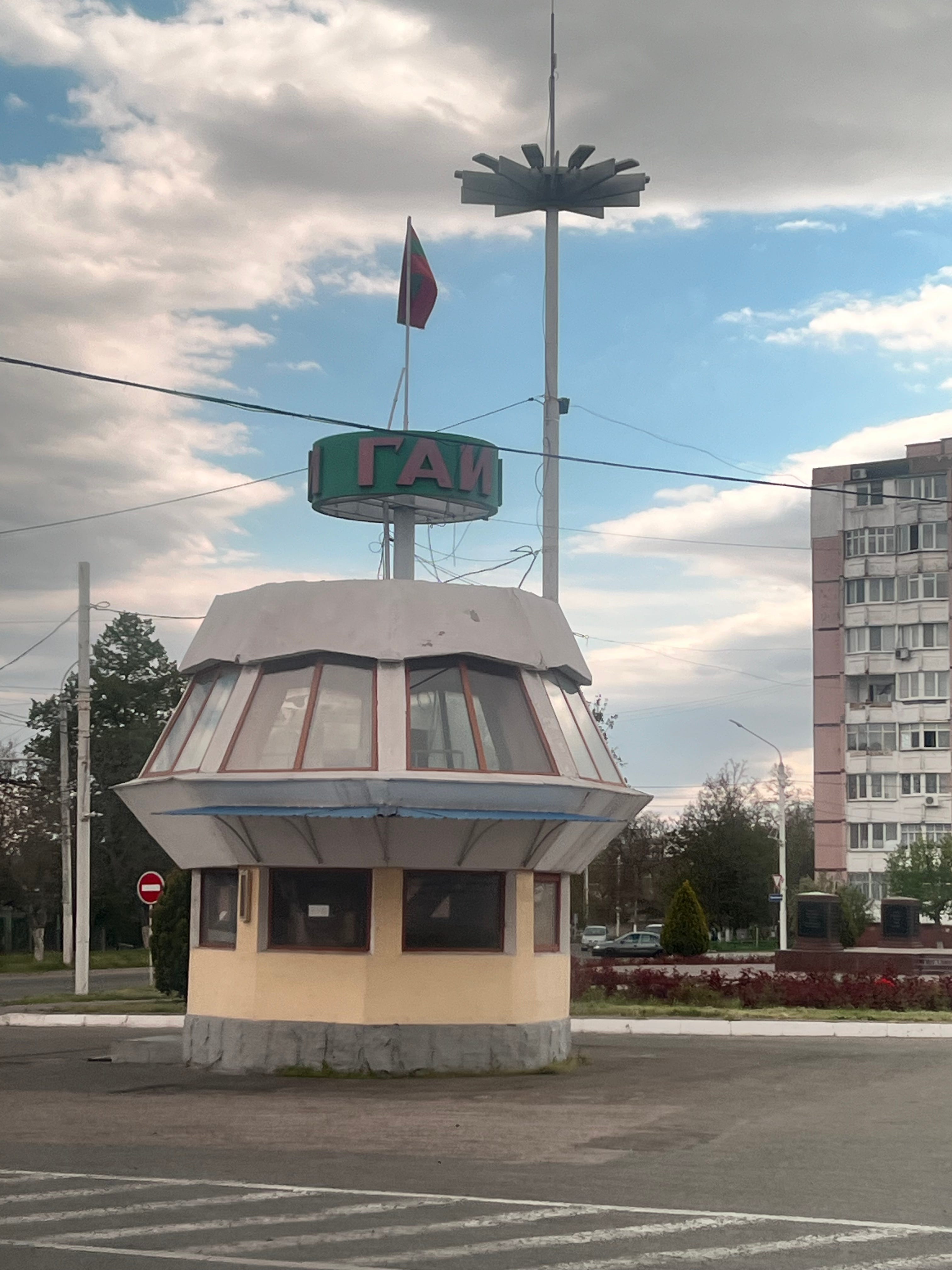
I decided to trust the process. For about 40 minutes after the van bus marked ‘Tiraspol’ departed, I tried to deduce from the position of the sun whether we were indeed headed east toward Transnistria, but eventually we arrived at a little kiosk that looked reassuringly last-century Iron Curtain. There, we were all made to disembark and declare ourselves to a scowling officer whose only question was “one day?” Assured that I was not smuggling myself permanently into her glorious homeland, the official stamped a piece of paper and slipped it into my passport. The other passengers and I re-boarded the bus, and we ushered through the security gates. We were officially off the map.
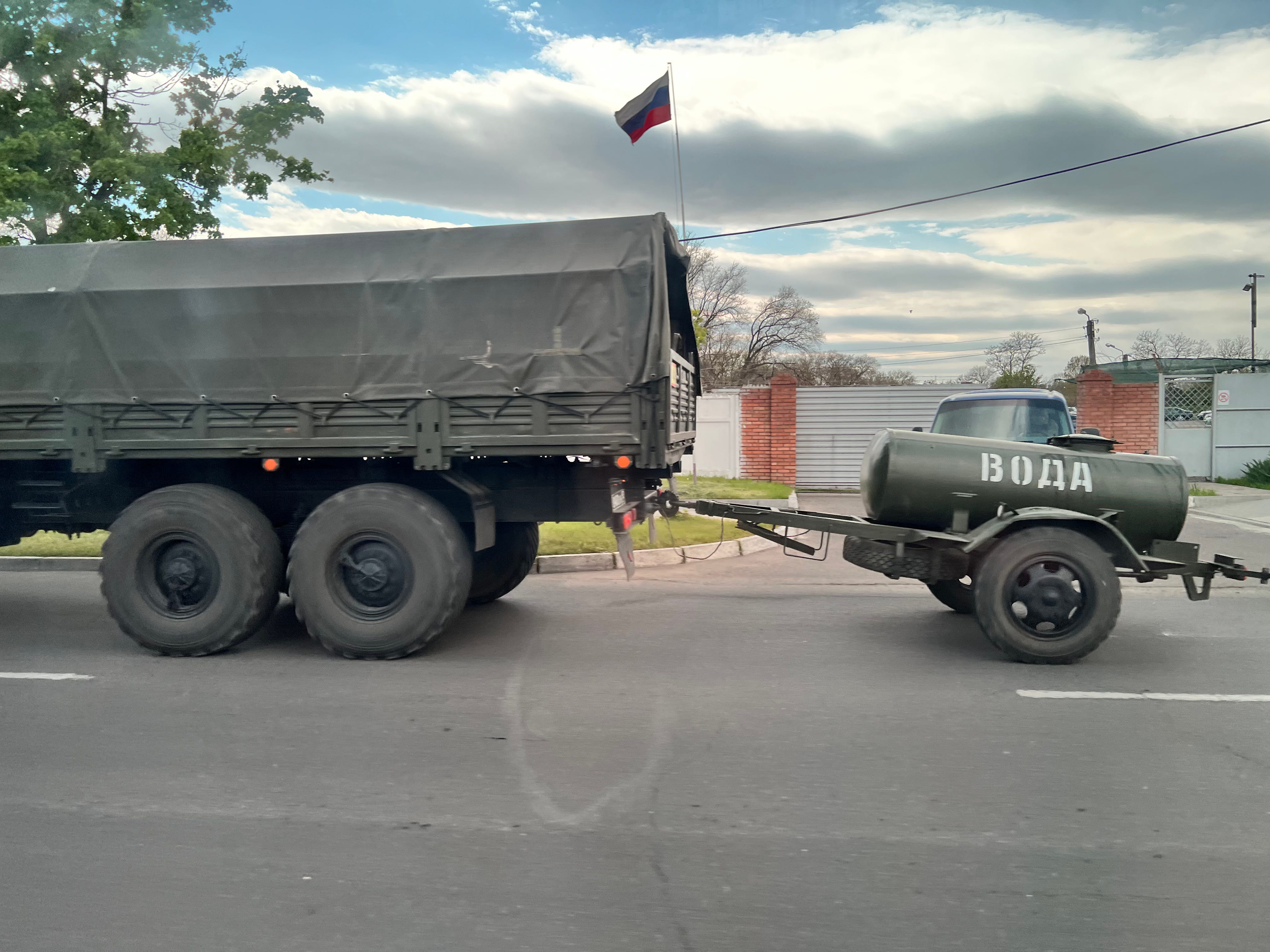
The road signs were entirely in Russian now, and the local flag hanging limply from atop some institutional-looking building had the hammer and sickle on it. We passed a tank parked in the middle of a traffic circle, and a convoy of army trucks.
Before long, we entered Tiraspol, which you will be as relieved to discover as I was, is the capital of Transnistria. When we pulled up alongside a market, everyone else on the bus piled off, but since it didn’t yet look like we were in the heart of town, I stayed put. “Center?” I asked the bus driver.
He gestured to me to stay onboard, then asked in minimally recognizable English where I was from. When I said USA, he replied with ‘No English.’ At the next light, however, he ventured a tentative ‘Italiano?,’ at which point we realized we could at least make ourselves mutually intelligible. He told me his name was ‘Leonardo’ and when I responded ‘como da Vinci?’ he laughed like it was the funniest thing he had ever heard.
Leonardo deposited me in the center of town, and gestured to a bus stop across the street, saying he would be stopping there at 5pm for the return trip to Chisinau. “A presto!” he cried “Ci vediamo alle cinque!”
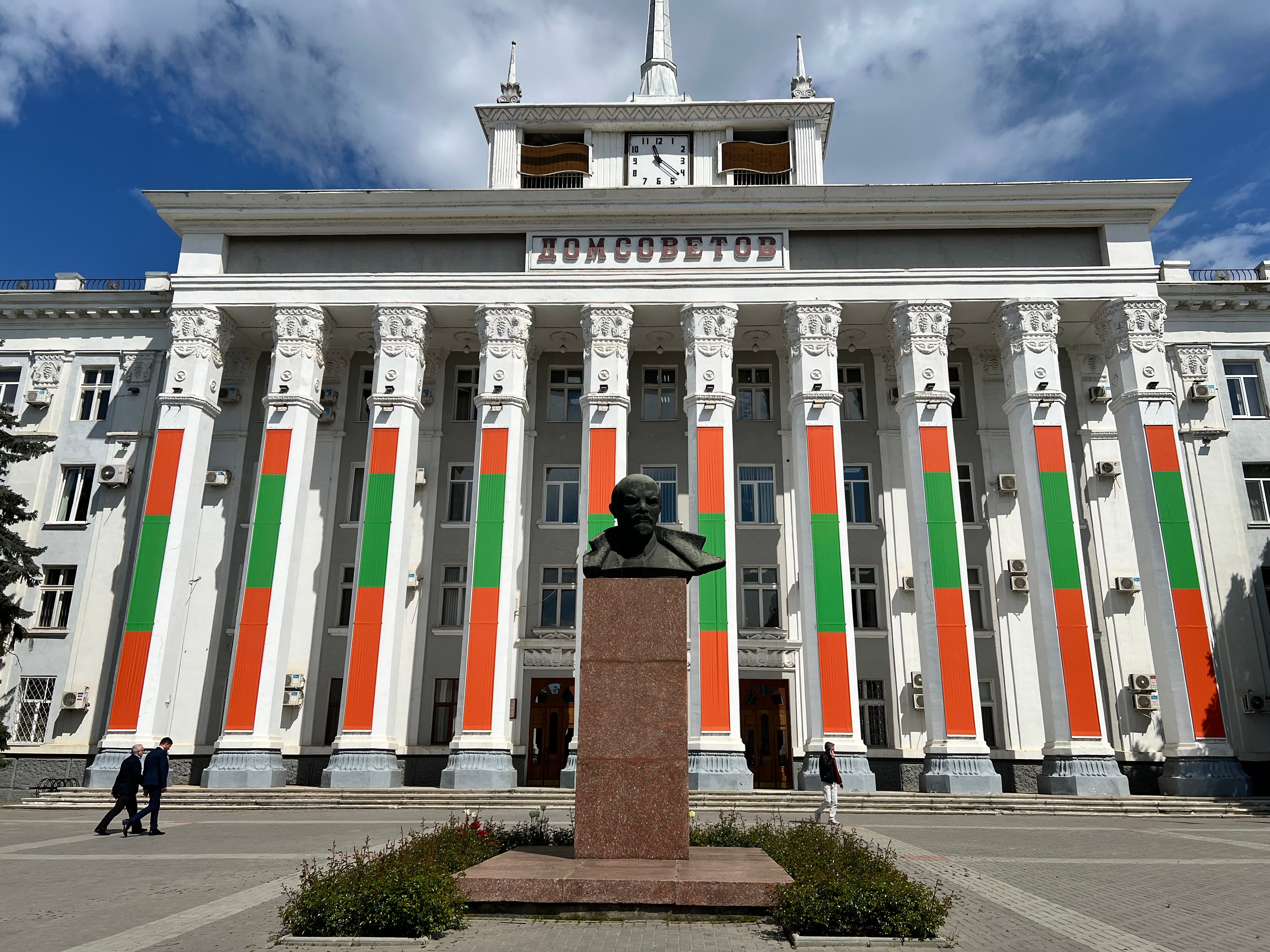
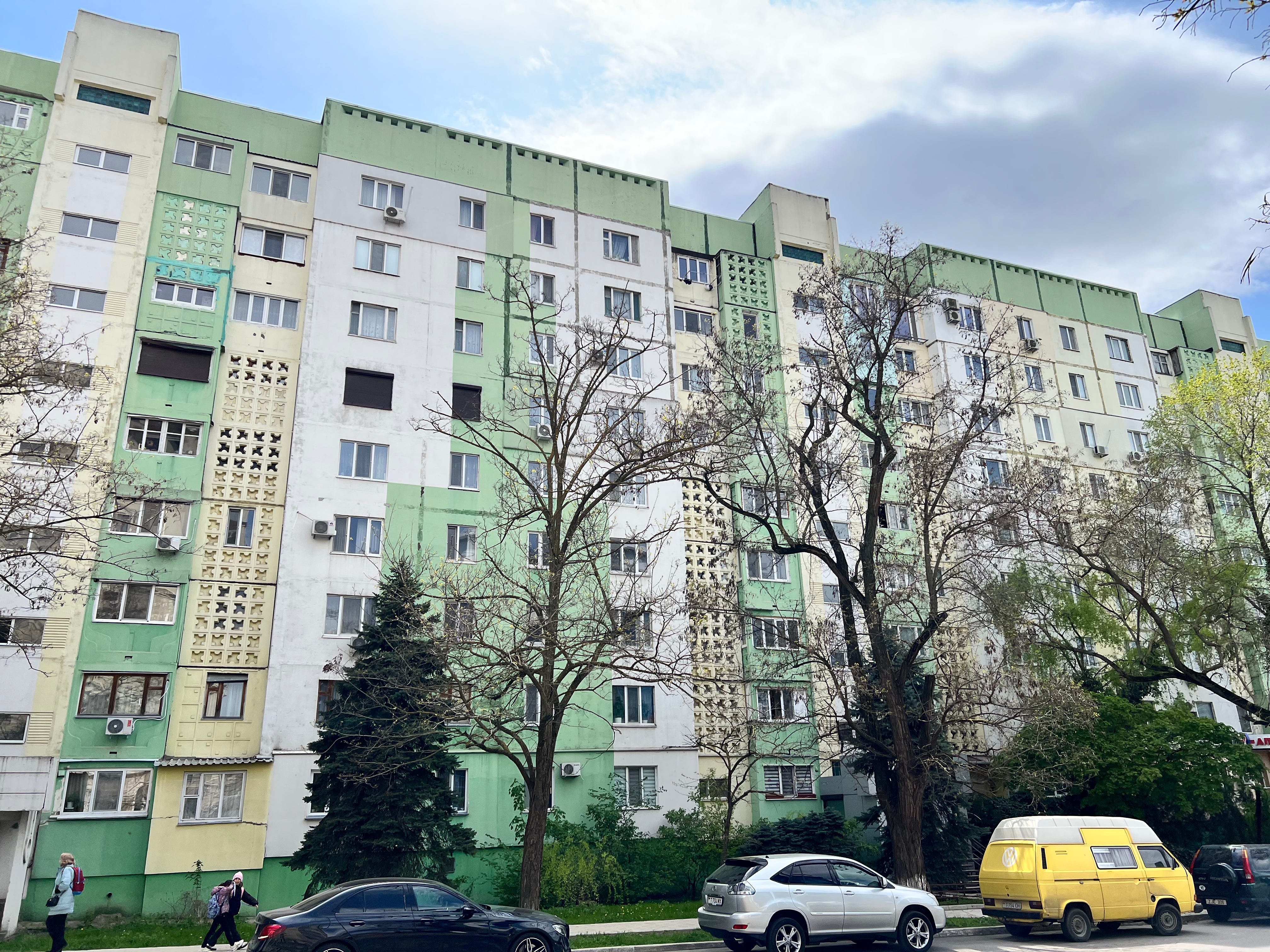
Finally, I was on the ground in my long-held object of desire. My first impression was of broad avenues lined with a few shops and lots of faded, peeling apartment blocks painted in shades last seen at your local Sherwin Williams circa 1978. I passed some extremely Soviet-looking buildings, including one famously fronted by a statue of Lenin, that I’m sure were meant to inspire awe, but from this vantage point seemed far more ironic than impressive. I had a very Soviet-esque experience changing money at a bank that involved waiting in several lines and much stamping of various papers and concluded with the issuance of a handful of bills utterly without value anywhere else in the world.
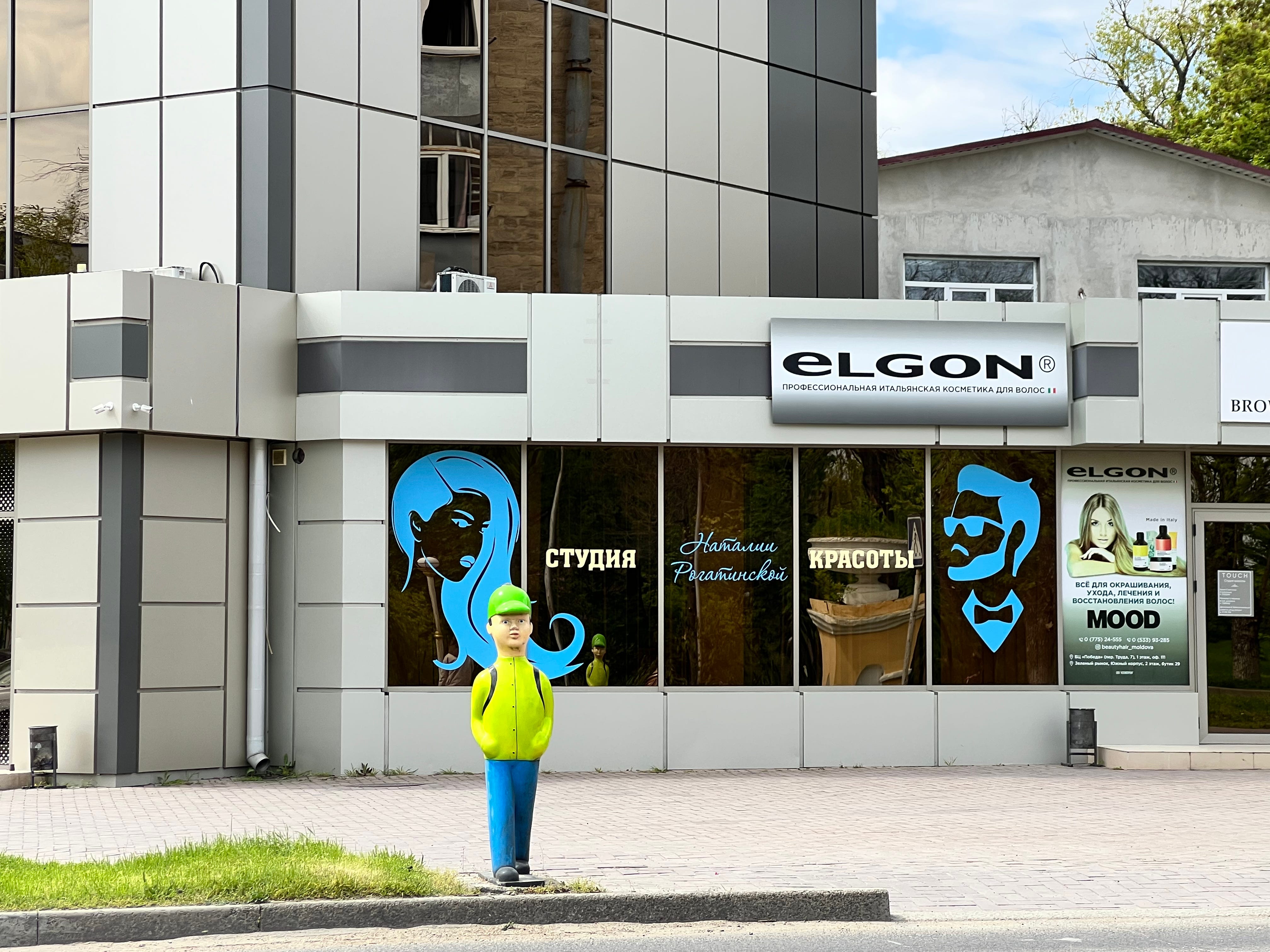
I wandered through a grocery store (owned by Sheriff, the same company that owns all the grocery stores, the gas stations, the Russia hotel and casino, the country’s football team, a publishing company, and basically the entire Transnistrian economy) and found it ghoulishly lit, but well-stocked with local cognac and Barilla pasta. I had lunch at a decent restaurant next to a group of 12 whose table was absolutely smothered with party-size platters of piancinta and sausages, yet who seemed unimpressed and maybe even a little depressed by the bounty. I came across a life-sized statue of a boy meant, I think, to alert children to where they should wait before crossing the street, but which looked as though it hadn’t encountered an actual child in decades. When I got to the park on the other side, I found it overgrown with weeds, and nearly empty.
Actually, I found the whole city weirdly empty, and not only in the physical sense. Tiraspol was unnaturally quiet and unanimated, devoid of any kind of urban energy and really much human spirit at all. It seemed empty of purpose.
I realize that’s a ridiculous–perhaps offensively so–thing to say for someone whose encounter with the place lasted roughly as long as it would have taken to watch the original Star Wars trilogy. Maybe if I had had better luck finding someone I could communicate with, I would have learned that Transnistria is in fact full of delightful if not readily obvious charms; that it is inhabited by a people bound together by strong sense of community and a distinctive culture. Perhaps I would have learned that Transnistrians have a deep sense of national identity. But to me, the place just felt shallow somehow, and forlorn.
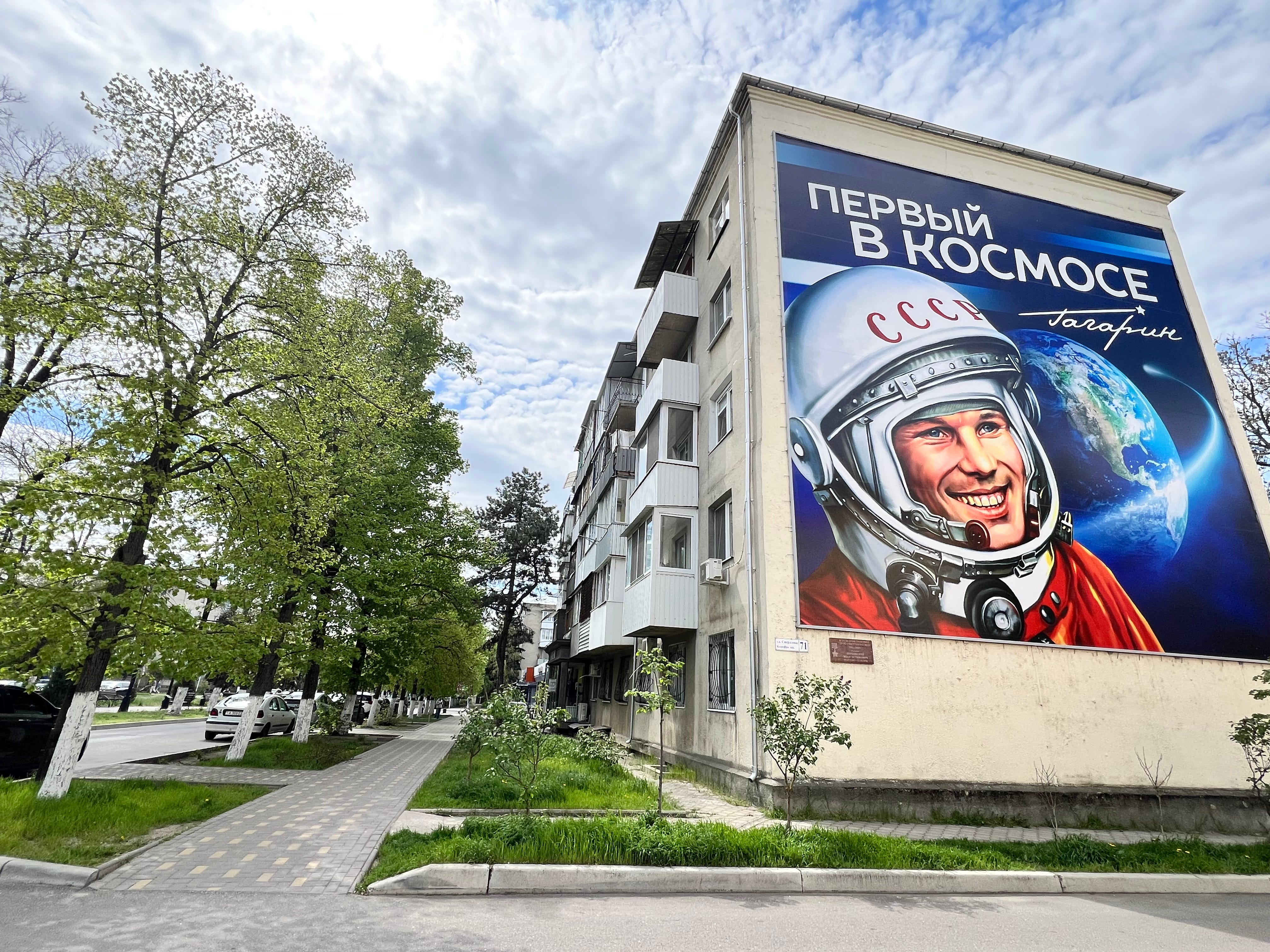
So, for that matter, did I. I had been drawn to Transnistria by my own romantic illusions of it as some kind of geopolitical Never Never Land, a destination where time stood still, where there was still a whiff of Cold War intrigue, and where merely reaching the place still bore some trace of adventure. But as I watched tourists pose for photos in front of a mural of a USSR cosmonaut painted expressly, I’m guessing, to give tourists something to take a picture of—or as I descended to a grim canteen tarted up with a few old posters and television sets to give those same tourists a suitably Soviet-looking environment in which to consume their sad cabbage roll lunch, I thought about Yevgenia back in the tourist office, so mystified by the allure of this flimsy, even cynical, scrim. Especially when thought about the very real missiles falling just a few kilometers away, on the opposite border from the one through which I had entered Transnistria.
It was only 3pm when I caught the bus back to Chisinau. I was sad to miss Leonardo, but I was ready to leave.
I do not disagree with you. I was making fun of those people, the theory being that they are more afraid of being ridiculed than anything else.
I also think making them look foolish takes away their mystique and power. Case in point, Mel Brooks’ send-up of Hitler in The Producers. Ditto Charlie Chaplain’s farce in The Great Dictator.
This feels like the start of a Twilight Zone episode! Fascinating to think about all the factors that contribute to making a place feel alive vs. not.