
Marseille
Or: France for Beginners
From the beginning, it was one of those trips where every little thing that can go wrong does. Nothing catastrophic, mind you, just a series of small hiccups that made me think maybe the universe was trying to tell me something about the advisability of getting on the plane.
My normal trick for obtaining a window seat without paying for it failed due to a glitch in the airport check-in machines. At the gate, the desk agent testily agreed to change my middle seat, but sought revenge for the extra work by making me check my carry-on. The bench where, now frazzled, I plopped down to wait for boarding wasn’t stable, and my coffee crashed to the floor before I’d had the chance to take a sip. Somewhere in all this, a much-loved silk scarf that was a gift from a much-loved Turkish friend disappeared from around my neck. And the slim little guidebook to my destination that author Duncan Smith had kindly sent me months ago—which focuses on the unique features of a place and which I had planned to deploy experimentally on this trip1—remained forgotten on the dining room table where I had placed it prominently the night before so I wouldn’t forget it.
And all that was before I got to Marseille.
The bus from the airport deposited me at the train station, perched above a grand staircase that cascaded down to the city center and was bedecked by lions and nekkid ladies. If, after a few blocks worth of trying to get my bearings, I had any doubts I was in France, they were quickly resolved by the sidewalk vendor whose books, instead of the normal collection of self-help and dog-eared copies of 50 Shades of Gray, consisted of Camus, Foucault, and the complete works of Claude Levi-Strauss.
The erudite bookseller directed me to the tourist office where, from behind the desk, a beaming, bald man in a sharp blazer greeted me effusively. His name was Johannes, and when I asked him what he thought I should see in Marseille, he whipped a map from the stack, opened it with a flourish, and began rapidly drawing X’s: basilica, market, calanques. Asked if he had any hotel recommendations, he suggested one a few blocks away, noting there were two or three others on the same street. “You won’t need them though,” he added. “It’s a Wednesday in March. You won’t have any problem finding a place.”
Johannes, I regret to report, was wrong.
I found the hotel he recommended, but it was fully booked. I asked the receptionist if she had any other suggestions and she named the one to the left. “Not,” she emphasized, with a sideways glance that communicated the full panoply of hotel-related horrors, “the one to the right.”
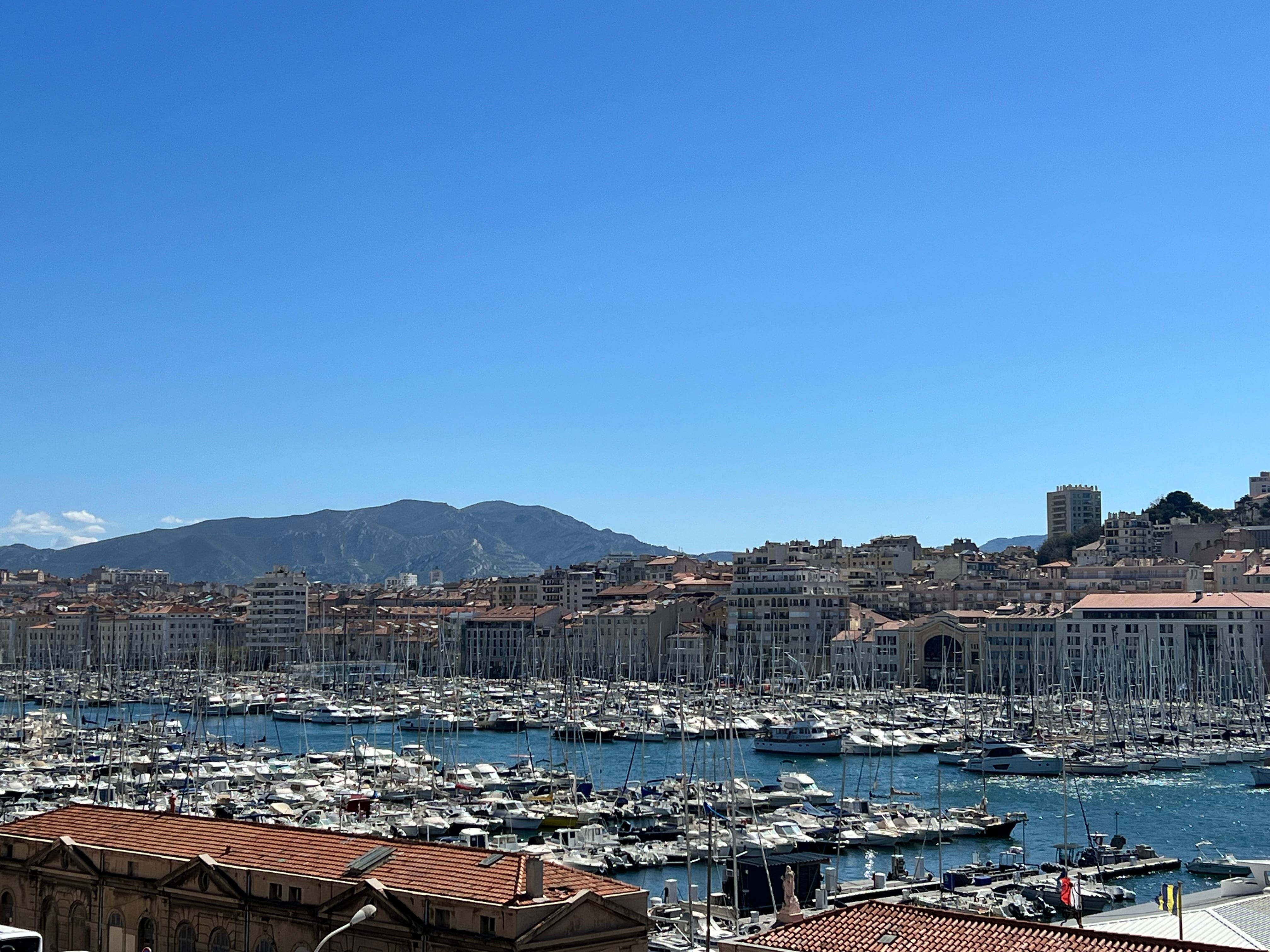
I had just missed snagging the last available room at the one to the left, a loss made more devastating when I learned that Georges Sand had once stayed there. That receptionist, however, helpfully suggested another hotel across the boulevard and around the corner. The one across the boulevard helpfully suggested the one right in the port. The one right in the port suggested I try their sister property across town, though that one was less boho digital nomad and more straight up youth hostel. I assured him I didn’t mind, but when he called, it too was fully booked. It was then that we both learned the root of Johannes’ fatal misapprehension: there was a gardening trade fair in town. Every hotel in France’s second largest city had been snapped up by people contemplating that year’s addition to their hydrangea collection.
Normally, I would be getting nervous about this point. But somehow, there in Marseille, as I continued to ping-pong from one unavailable hotel to another, it didn’t matter. My morning of small mishaps had turned into a long afternoon of fruitless searching and I was facing a potentially bedless night, but I didn’t care because everyone was just so darn nice.
In France.
I don’t want to engage in broad national stereotypes, so I’m just going to draw on my own experience here and say that in my experience, many of the French people I have met in my travels through their country have not been especially warm, even when you do all the things you’re supposed to do, like trill Bonjour, Madame at them like a crazed cockatoo every time you enter their shops. The language part is especially tricky because even though you know you are expected to speak French, no one seems especially pleased to hear you do it.
But that was not the case in Marseille. Not only did every single person listen patiently as I inquired, with the linguistic prowess of a French kindergartner newly awakened from his nap, about a room; they also conveyed their sorrow at their inability to supply one, and tried to help me rectify the situation. We weren’t in a full-blown Amy situation, but it came close. They called other places. They looked things up online. They suggested I jump in a taxi and go to the extremely overpriced Sofitel way out on the edge of things because they always have a room. And, in the end, one of them called the place near her apartment, and after a quick exchange of pleasantries, found me a room. A very expensive room, but the gardeners had left me not in a position to haggle.
There was something else nice that happened on that first day in Marseille: I met up with my dear friends Mary Alice and Max, who are excellent company and very good sports and have now joined me on unplugged trips for three years running. After we finished exclaiming about how glad we were to see one another, and solved the pressing issue of where we should go for an apèro, we compared initial impressions of the city. “I can’t get over how nice everyone is!” Mary Alice said. “In France!”
The word that everyone uses to describe Marseille is “gritty,” which is usually code for some combination of crime, immigrants, and graffiti in a quantity that seems disproportionate to the user. I can’t speak for the first, and while it is true that the bus into town from the airport passed over a raised highway from which I could look down on an apartment balcony where two police officers stood over a man who looked quite dead, I can’t vouch for the cause of his demise.
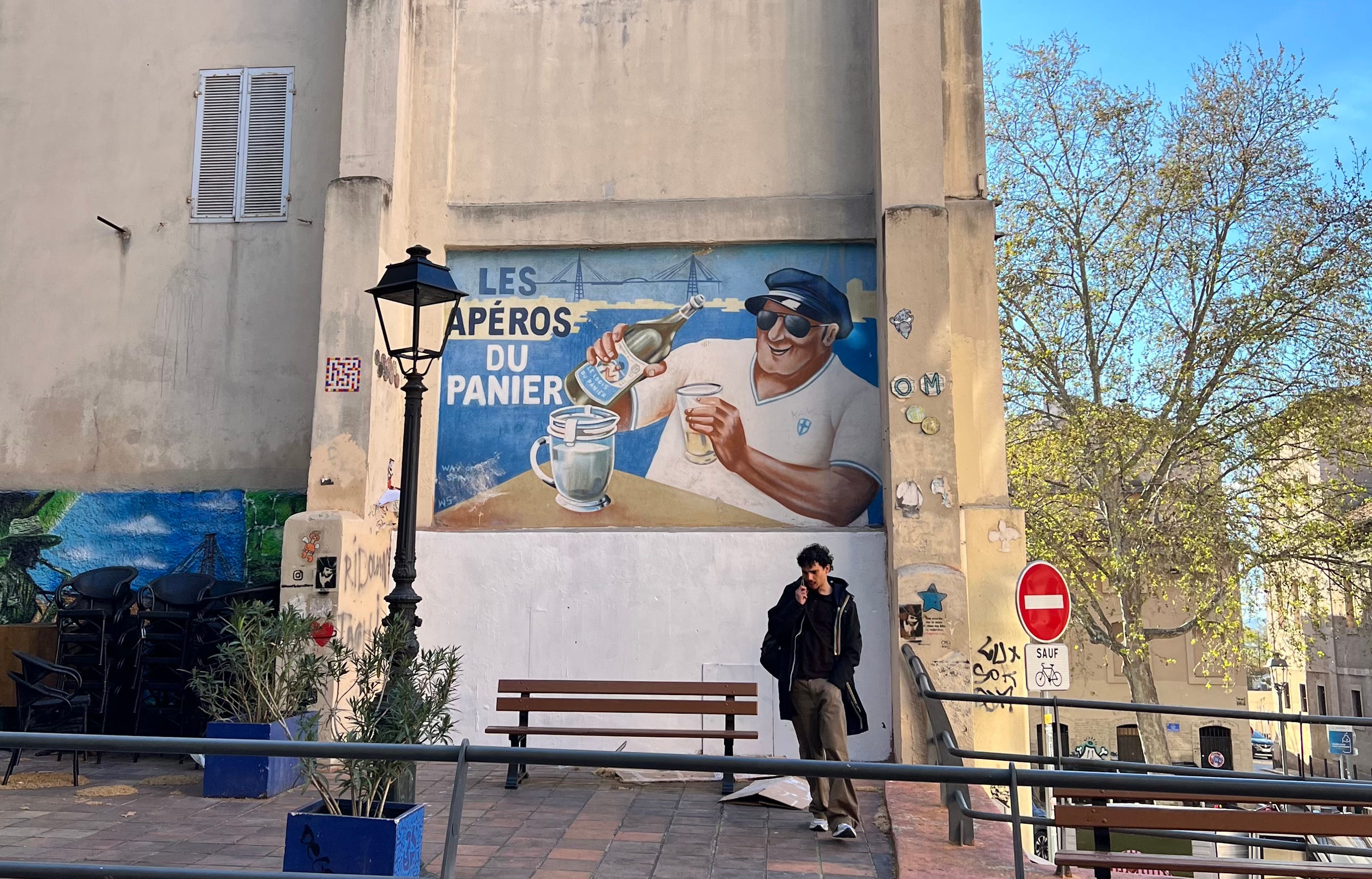
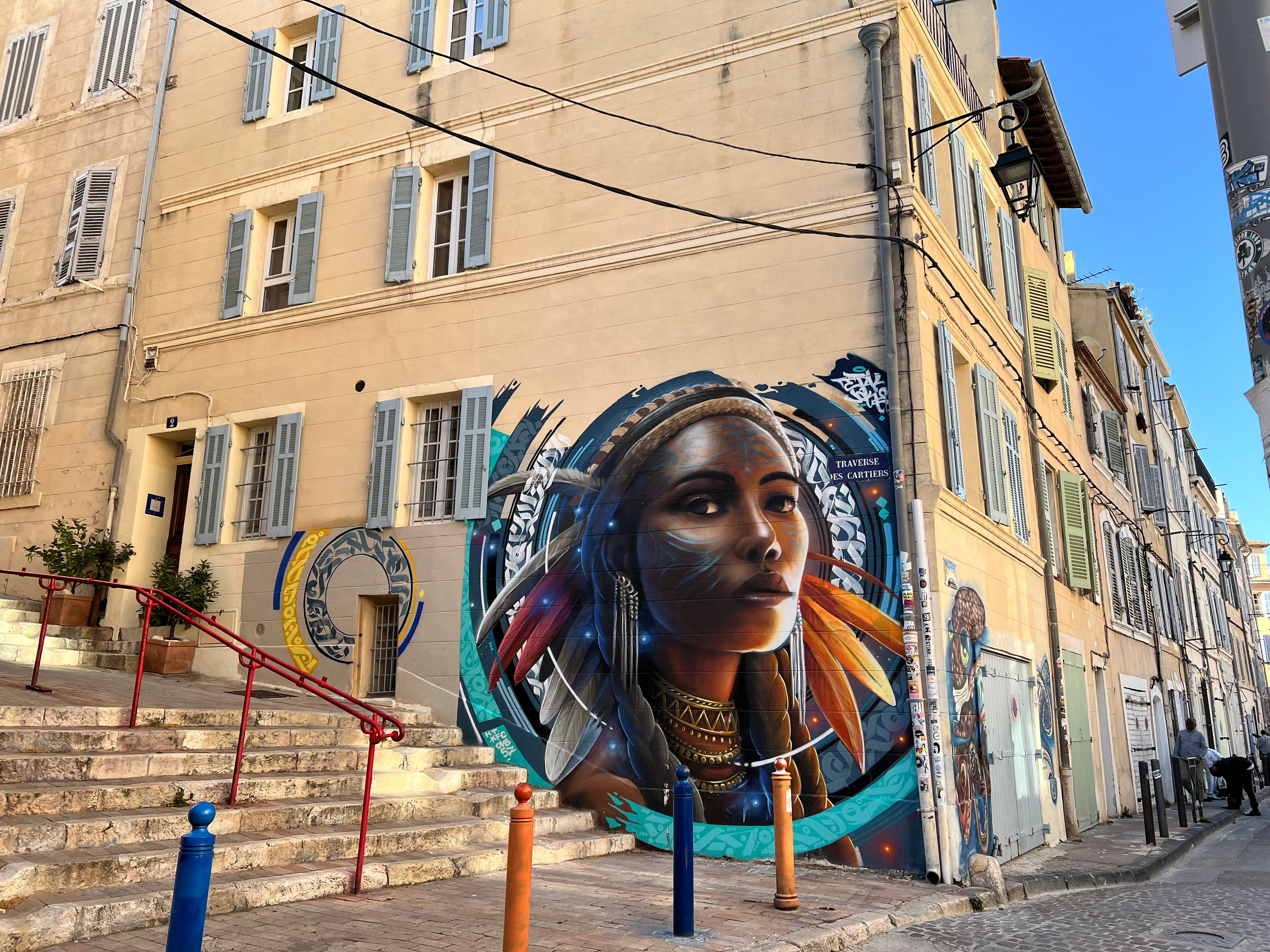
It is also true that we did not venture much beyond the central arrondissements, so I’m aware we got a highly limited sense of the city. But in the parts we did see, it seemed like the large North African population has gifted Marseille with a lively, souk-like neighborhood around Noailles, full of shops, an open-air market, and bakeries selling all manner of pastries dripping in honey and orange blossom water. And the graffiti has given the Cours Julien neighborhood, well on its way to hipster-town, an air of whimsy.2

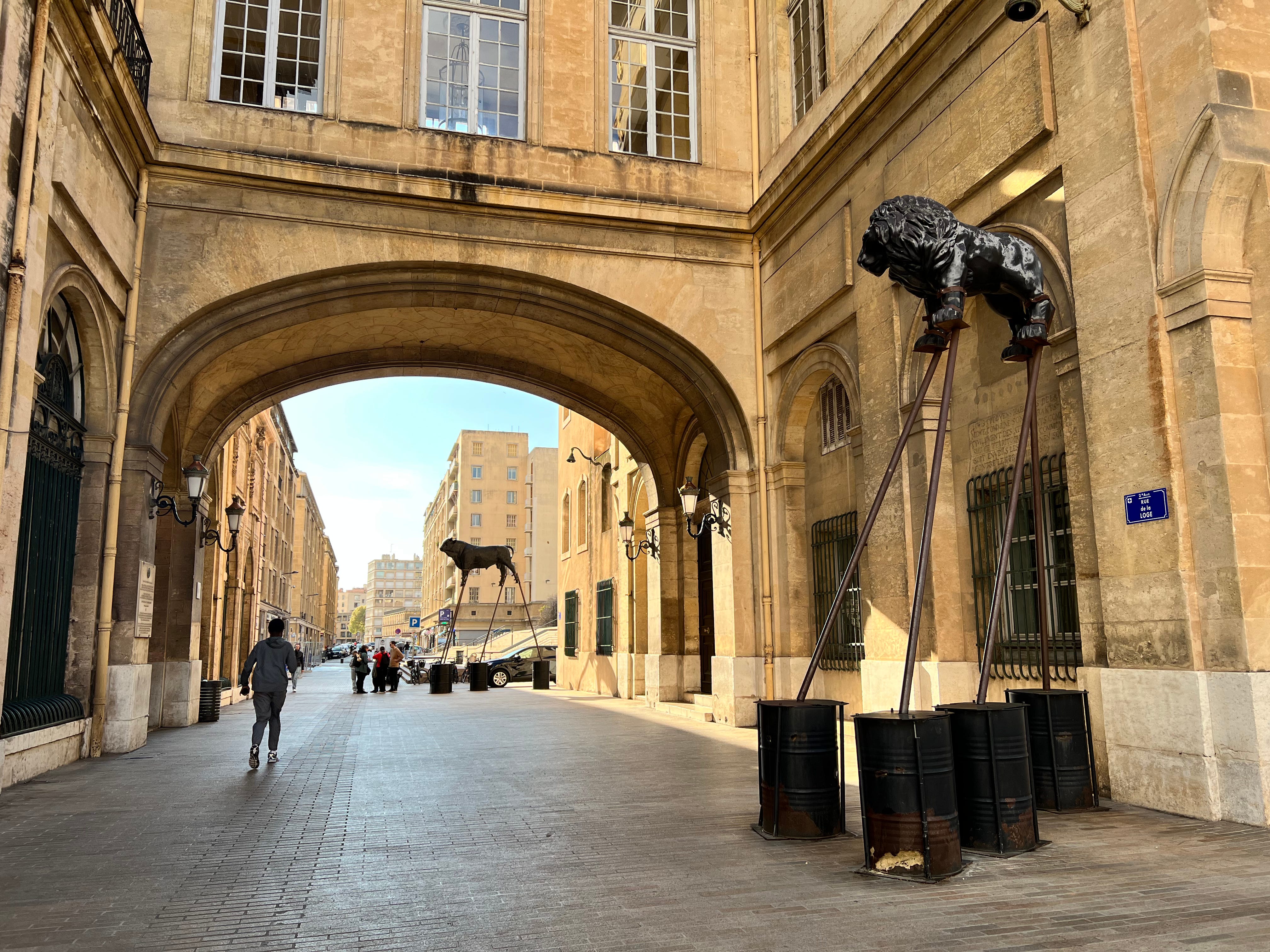
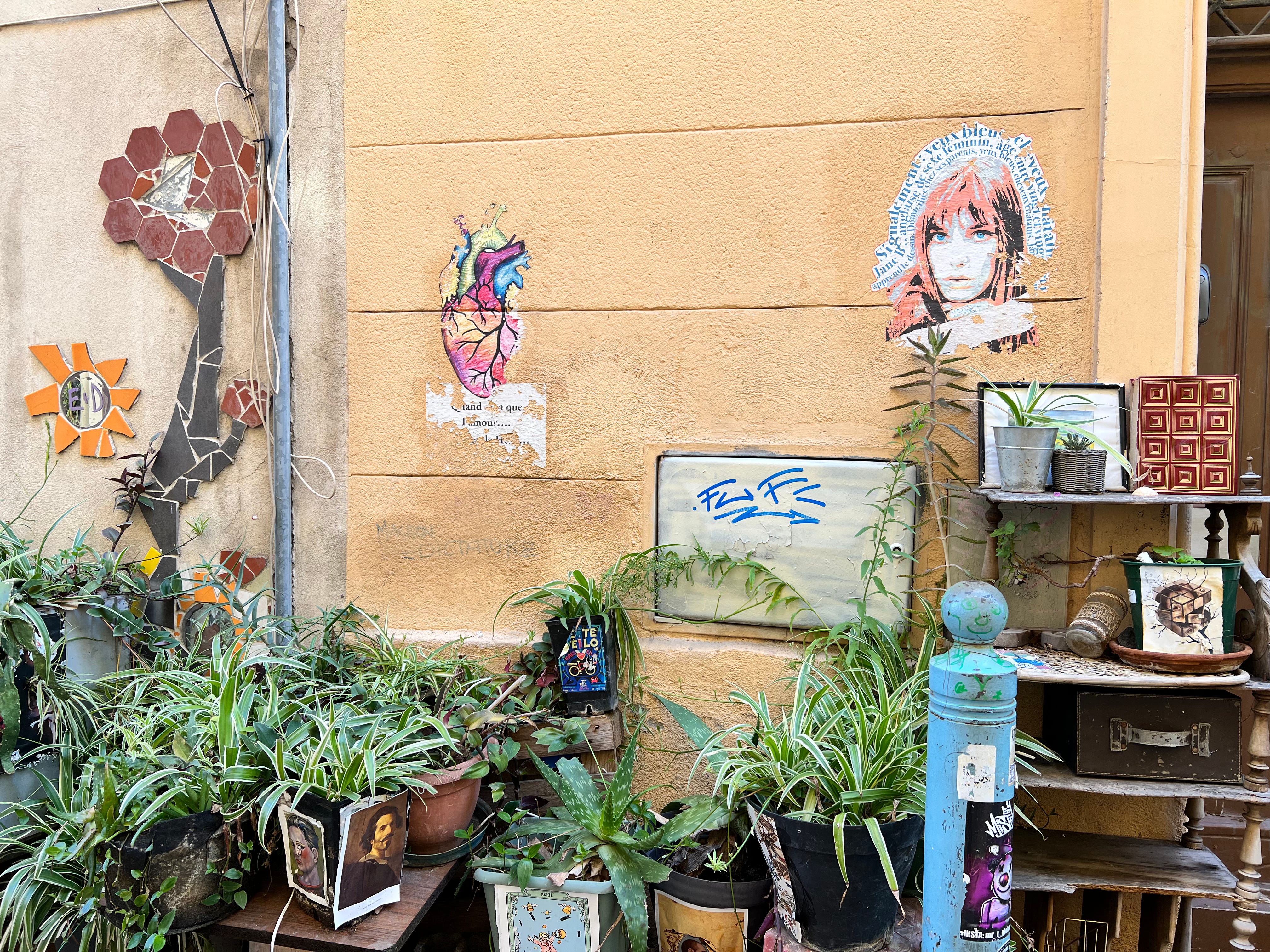
More to the point, there is so much to Marseille for which ‘gritty’ in no way applies: The stately Hausmann-esque streets, and the De Chirico-esque Vielle Charité.3 Alleys lined with small jungles of houseplants and the occasional Jane Birkin illustration. The juice stand that, although it wasn’t open when we were there, I loved anyway because, when it is open, it sells grape must. Which, apparently, used to be a thing in Marseille.
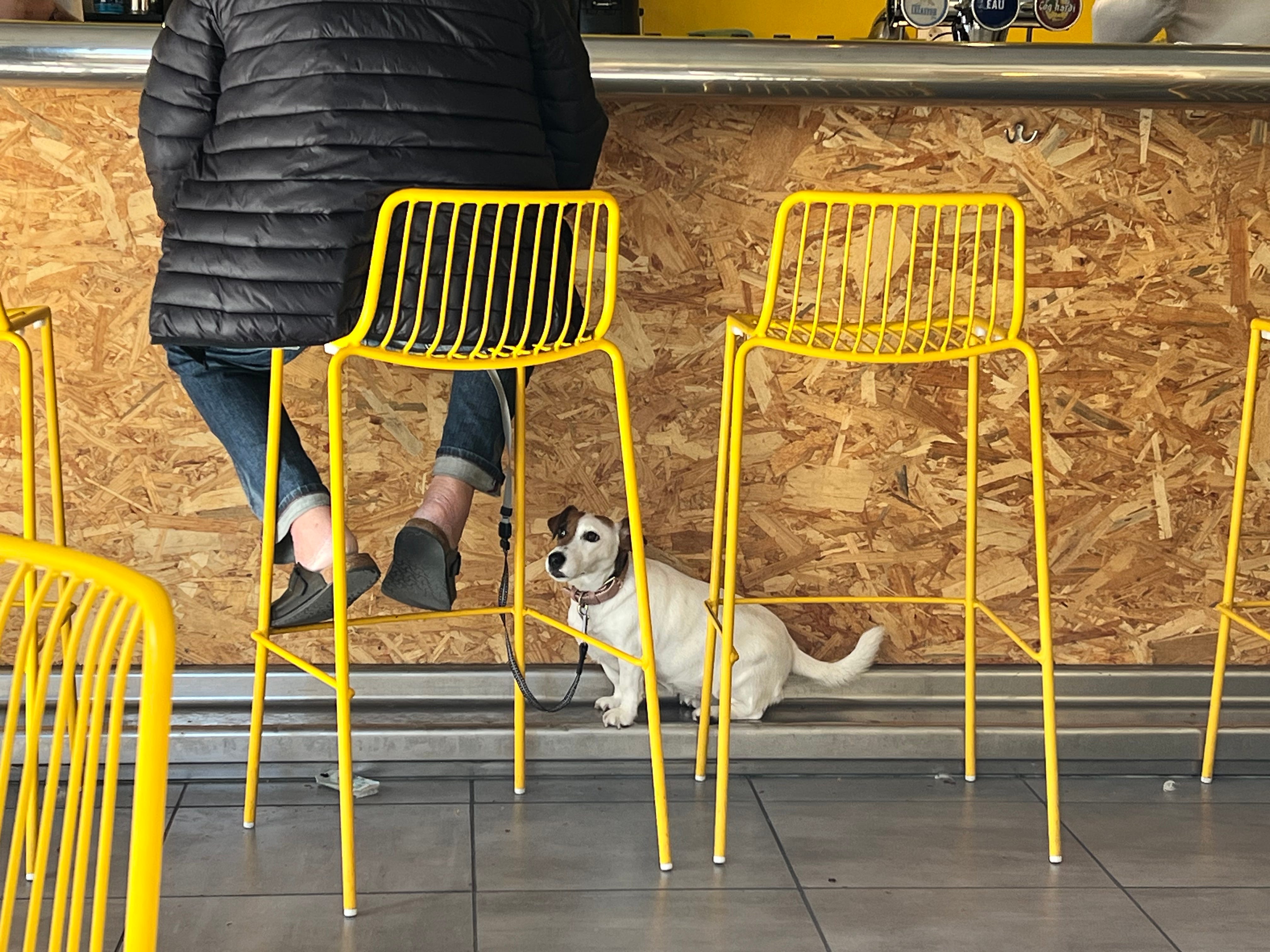
And yes, there is the sea, and a sky the color of sapphires, and almond trees in bloom. But the thing that really did it for me about Marseille was the people. Theirs wasn’t the smiley, ‘have a nice day,’ American variety of niceness. It was more engaged somehow, and ever so slightly flirtatious, as if the person not only saw you but liked what they saw. We encountered it over unusually good croissants at a café where the waiter had his hands full with breakfast customers and their demanding Jack Russell terriers, but still found time to ask about what brought us to Marseille. And again, at the Musée Cantini,4 where the lady at the ticket desk seemed absolutely delighted to inform us that admission was free.
At an adorable cave of a shop in La Panier, Enzo explained how true Marseillaise soap5 is made of only four ingredients. At a bakery around the corner, Etienne plied us with many variations on the boat-shaped cookies called navettes, detailing the history behind each one, and promising as if this were a good thing that they would last at least a year.
And after the food at an obviously tourist trap restaurant (lots of mentions of grand-mères; waiters dressed in old-timey uniforms, that sort of thing. We ended up there because the place I had wanted to try was closed despite the sign on its door saying it was open) where we had lunch one day turned out to be shockingly good, we were all so delighted that we introduced ourselves to the owner, Antonin, who in turn was so delighted that he told us about the guillotine that once stood in that very square, and showed us where Napoleon had lived upstairs.
When I got home, and was searching for exact address of the restaurant, I learned that Antonin, in addition to being a restaurateur, is a French reality tv star. Which, when you think about it, kind of proves my argument about the Marseillaise being uncommonly nice.
It all made me think that Marseille was the place where everyone should have their first Gallic encouter; France for beginners, as it were. How many visitors would have avoided that characteristic anxiety they associate with France, the low-grade worry over what should I wear?; do they hate me?; will I remember that it’s a café creme, not a café au lait, and if I forget, will the waiter laugh at me? had they postponed Paris until after they had built up their tolerance by immersing themselves in sunny, laidback, warm-in-every-sense Marseille instead?
There are whole cadres of sociologists out there doing research on the importance of what they unfortunately insist on calling ‘micro-encounters.’ Ordering a coffee, asking directions, striking up a conversation while you wait in line—those deceptively routine moments, they have found, can be powerful contributors to one’s sense of well-being. I’ve certainly found it to be true when I travel. I think a lot of us walk around with this imaginary ideal that connecting with locals means being invited to someone’s home for dinner where you subsequently form a bond so significant that you return for their kid’s wedding a couple of decades later. And sure, that happens sometimes. But far more common—and just, I would argue, as salutory— are the times when a stranger will look you in the eye, return your smile, and reach for a tiny, fleeting moment of connection.
I don’t know how you teach an entire city to do that, but let me tell you: it’s powerful stuff.
On my last day in Marseille, I met Mary Alice and Max for early morning coffee at a football-themed café that was the one place we could find open at that hour. After tentatively planning for next year’s meet-up (stay tuned, Tblisi!), I sadly said goodbye to them as they departed for the airport. I still had a few hours left before my own flight, so I started to wander in a way I thought was aimless but somehow landed me back at the Cours Julien area.
The main square was nearly empty. I was feeling pretty melancholic—this frequently happens when I travel with friends; after spending time so intensely with someone, their absence feels more acute in the transition back to solitude. No sooner had I sat down at the one café that was open, than a trio of pigeons started casing my table. They all looked like they had seen better days, but the most brazen and bruiserlike of them—he looked like a pigeon Marlon Brando—had some kind of terrible deformity on its leg. As the waiter put down my coffee, he noticed me staring at the misshapen bird. ”“Je pense que c’est une tumeur,” he said. “Je le plains en peu.”
“Moi aussi,” I replied. “I feel sorry for him too.”
We smiled at each other sadly. And that was it. But as I walked to the hotel to grab my bag and head back to the airport, I felt lighter. And convinced—something I can’t truthfully say about all of the places I visit for this newsletter—that I would return to Marseille.
Enough of you have asked if the by-laws of The Unplugged permit printed guidebooks, that I thought I should test the proposition. Alas, the universe—or at least my subconscious—put its thumb on the scale. But upon return I did learn enough fascinating things in its pages that I’ve decided to give a hint of them here in subsequent footnotes. What do you think? Should I be bringing guidebooks with me?
If I had had Duncan’s book with me, for example, I would have known to be on the lookout for the Space Invaders mosaic, the work of a Marseille-based street artist named Invader who lives in an apartment building designed by Le Courbusier.
Which, I learned from Duncan, was built as a poorhouse that prevented its residents from offending the tender sentiments of upstanding Marseillaise by being constructed without exterior windows. And later became a barracks for the French Foreign Legion.
Apparently, Jules Cantini was a big deal in Marseille: a sculptor himself, he paid for but did not actually create the fountain in the crossroad-y Place Castellane and when he died in 1916, donated his home, a 17th-century palace, to the city to use as an art museum.
Per Duncan: this was so big an industry that by 1924 there were 122 soap manufacturers in the Marseille area. Now, according to Enzo, it’s down to three.
Yes yes and yes. I think you should travel with guidebooks! Also, I'm a huge Invader fan and didn't know he lived in Marseille (but did YOU know there's an app for collecting all the mosaic art that he creates! I found over 30 in Paris this weekend :) )
I love this! And now desperate to go back to Marseille 💕 (and ps, the ‘do they hate me?’ thing is strong even with fluent French and 25 years’ France travel experience 😂)